
We post news and comment on federal criminal justice issues, focused primarily on trial and post-conviction matters, legislative initiatives, and sentencing issues.

‘VENUE’ IS WHERE YOU DO IT, NOT WHERE IT’S FELT
The Supreme Court last Thursday handed down a rare decision narrowing the government’s ability to do mischief with criminal venue.
 About 20 years ago, I was having lunch with an attorney who was only a few weeks into private practice after a long career as an Assistant US Attorney. He was no backbencher: as an AUSA, he had handled some pretty heavy terrorism and organized crime cases.
We were discussing a criminal tax case the government had brought against an out-of-district defendant, a prolix indictment in which a few counts were based on conduct that had occurred within the district while a substantial majority related to acts that had occurred entirely outside of the district. When I suggested to him that the out-of-district counts had a serious venue problem, he scoffed, “Venue is nothing. It can always be waived.”
“Um, not really,” I responded. “You’re thinking about venue in a civil case. That’s easily waived and nearly as easily overlooked. For criminal venue, you should check out the 6th Amendment.”
As seldom as I am correct, I cherish the memory that I was right about that. Within a month, the court had thrown out seven of the nine counts in the indictment for lack of venue.
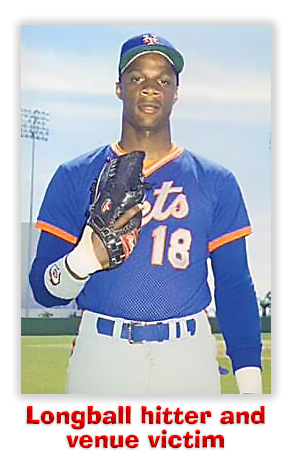 The idea behind venue is that a defendant should be tried where the crime occurred and the evidence is located, simply as a matter of fairness to the defendant. Still, criminal venue usually gets little respect. First, venue need only be proven by a preponderance of the evidence. Second, when the crime is a “continuing offense,” it can be tried in any district in which any element of the offense was committed. Third, the criminal code and precedent are full of exceptions and work-arounds: when professional baseball player Darryl Strawberry was charged with tax evasion for filing a tax return in California (where he lived) that omitted a lot of cash he had received over the prior year, he and his agent were charged in the Southern District of New York, because Darryl had sold some memorabilia at a baseball card show there, and the cash he received was subsequently not declared in his tax return. Good enough for venue, the court said. (Darryl was convicted of tax evasion, but he was pardoned by President Trump – himself no fan of the IRS – last year).
And we won’t even try to bring up the Vicinage Clause and the Yellowstone Zone of Death. That’s a discussion for another time.
Last week’s decision was a breath of fresh air, despite some suggesting it is a narrow ruling. As a Twitter employee in San Francisco, Ahmad Abouammo took money from the Saudi Arabian government for providing personal information on Saudi dissidents and passed it along to a high-level official in the Saudi royal court. One Red Cross worker who was critical of the Saudi government had his information and thereafter was tortured with electric shocks to an inch of his life.
The count in question at the Supreme Court was whether Ahmad could be tried in San Francisco for violating 18 USC § 1519 by creating a fake invoice on his computer in his second-floor Seattle and emailing it to FBI agents who were waiting downstairs. The government charged him in San Francisco because that was where the FBI investigation was based, rather than in Seattle where he created the document. Ahmad argued that § 1519’s language made the crime complete when he finished falsifying the document, which occurred in his Seattle office.
The government argued that venue was proper in San Francisco because the investigation Ahmad intended to disrupt with the phony invoice was being run out of the FBI office there. But in last week’s 9-0 decision by Justice Elena Kagan, the justices reversed a 9th Circuit conclusion that the “intent” requirement in § 1519 – which criminalizes falsifying documents in a federal investigation – allows the government to prosecute the defendant where such an investigation is located.
 Kagan noted the historical purpose of the venue clause, based on the Declaration of Independence’s complaint that the British Parliament often “transport[ed] us beyond Seas to be tried for pretended offences.” The constitutional right to venue where the crime was committed is guaranteed in Article III (which instructs that “Trial of all Crimes” shall “be held in the State where the said Crimes shall have been committed”) and again in the 6th Amendment (giving defendants the right to a jury “of the State and district wherein the crime shall have been committed”).
To implement that constitutional rule, Kagan wrote, courts generally determine the location of a crime’s “essential conduct elements.” The § 1519 “essential conduct element,” the falsification of a document with intent to do so, makes the crime complete. The defendant does not need to transmit the document to anyone nor use it in any particular way, because the only proscribed conduct is falsification. Thus, venue must be where falsification occurred.
Kagan rejected the 9th Circuit’s view that because Ahmad intended to obstruct a San Francisco investigation, venue was proper there. “This Court has never looked to a statute’s mens rea elements in considering venue. Nor would it make much sense to do so.” Whatever obstructive effects Abouammo’s false invoice may have had in northern California, they were not elements of his crime. And because that is so, those effects cannot figure in determining where Abouammo’s ‘crime [was] committed.’”
Abouammo v. United States, Case No. 25-5146, 2026 U.S. LEXIS 2467 (June 11, 2026)
~ Thomas L. Root