Tag Archives: qualified immunity

Our House Was A Very, Very, Very Fine House – Update for October 16, 2026

We post news and comment on federal criminal justice issues, focused primarily on trial and post-conviction matters, legislative initiatives, and sentencing issues.

IDIOCY IS NO DEFENSE
I once had a police detective friend down in Virginia who swore that ‘FBI’ stood for ‘freaking bunch of idiots’.  (Well, not ‘freaking’ but you can fill that in). 

 The ‘idiot’ part was on display in an 11th Circuit decision last week that held that while the federal government is largely immune from a Georgia family’s lawsuit over a misdirected FBI raid at their home, the agent who led the raid was incompetent and may have violated their constitutional rights.

In 2015, the FBI launched Operation Red Tape (aptly named for a stodgy bureaucracy) to address violent gang activity in Georgia. Eleven years ago this week, the Operation resulted in a 30-defendant indictment. One of the unfortunate defendant was Joe Riley.

The SWAT team, which loved kicking down doors, secured a search warrant for Joe’s house, located at 3741 Landau Lane. Hilliard Cliatt, his then-fiancé Curtrina Martin and her seven-year-old son, lived in a nearby house, down the street and around the corner from Joe. Hilliard’s house was a very fine house… until the FBI got done with it.

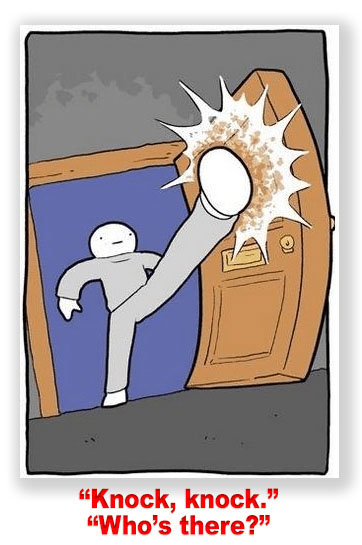
When FBI Agent Lawrence “Wrong Way” Guerra led the SWAT team on its predawn raid to nab Joe, he missed, smashing through Hilliard’s front door, detonating a flash-bang grenade, holding the occupants at gunpoint, terrorizing the boy, and tossing the place. Unsurprisingly, Lawrence ignored Hilliard’s protestations of innocence until another officer stumbled across some mail with the residence address on it and realized the team had the wrong house.

When the dust settled, Hilliard, his fiancé and her son all sued Lawrence and the Bureau. A district court found the agents were not immune from suit, the 11th Circuit reversed, finding they were.  The Supreme Court sent the case back.

Last week, the 11th reversed the qualified immunity granted to Lawrence, noting the geographical and physical differences between Hilliard’s residence and the one listed in the FBI’s search warrant were so stark that the agent’s “conduct in verifying the address to be raided was simply not consistent with a reasonable effort to ascertain and identify the place intended to be searched.”

The two homes were three houses away from one another, on opposite sides of the road and separated by a cross street. Plus, street signs clearly marked the intersection as not being the street where the target home was located. Only an idiot would have driven by in the daylight the day before and still gotten it wrong.

But, the Circuit hinted, Lawrence was just the idiot to pull it off. “[A] reasonable jury could fairly conclude that Agent Guerra failed to engage in reasonable efforts to avoid error, and, therefore, violated the plaintiffs’ constitutional rights,” the Court wrote. “Such plain incompetence has clearly violated the 4th Amendment since at least 1995 when we decided this materially similar precedent.”

The decision was a mixed bag. The Circuit upheld the district court’s holding that the government was immune because a drug raid is a ‘discretionary function’ exception to the Federal Tort Claims Act. But the Court’s decision is noteworthy in that it recognized that some negligence – picking the wrong house with the wrong address on the wrong street – is too extreme to permit a grant of qualified immunity to the agent who was in charge of the raid.

Martin v. United States, Case No. 23-10062, 2026 U.S. App. LEXIS 30717 (11th Cir., October 7, 2026)

~ Thomas L. Root
The Immunity of Charlatans – Update for July 7, 2017

We post news and comment on federal criminal justice issues, focused primarily on trial and post-conviction matters, legislative initiatives, and sentencing issues.

LISAStatHeader2small
AIN’T NO JUSTICE…

In the annals of whack-job prosecution “experts,” Steven Hayne and Michael West are royalty. The pair, who have dominated Mississippi’s death investigation system for the better part of 20 years, have put dozens of people in prison for life or on death row with testimony that falls well outside the constraints of science.

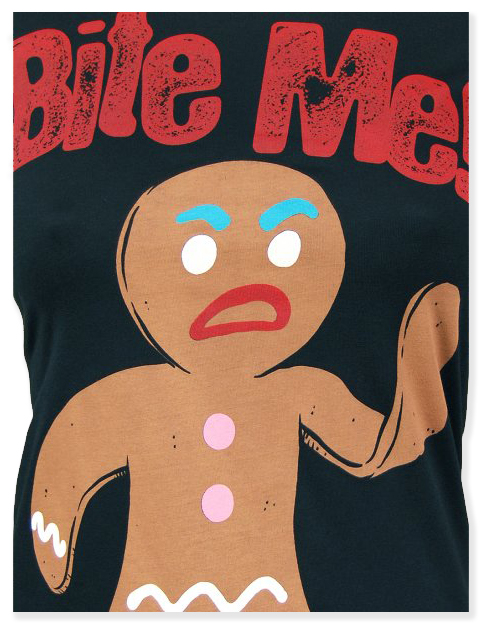
biteme170710Hayne once claimed that a murder victim’s bullet wounds were “consistent with” a theory that two people were holding the gun when it was fired. West has claimed to be able to trace bruises on a victim’s abdomen to the specific shoe that inflicted the injuries, to match fingernail scrapes to the specific fingernails that made them, and in one case, claimed that the knife wounds in a murder victim could only have been caused by one specific knife and that marks on the defendant’s hands that could only have been caused by gripping the handle of that same knife.

Scott Greenfield succinctly explained bite-mark forensics in his Simple Justice blog: “Just to be absolutely clear, bite marks identification evidence is complete, total junk science. It doesn’t work, which is how Hayne and West became the leading “experts” in bite mark evidence.”

Among the dozens of unfortunates locked up by the fake science peddled by Hayne and West were Kennedy Brewer and Levon Brooks. After the two were exonerated of murders that had gotten one of them sentenced to life and the other put on death row – based on nonsensical bite mark testimony from Hayne and West – they sued the “experts” under 42 USC § 1983. Last week, the 5th Circuit ruled that because Hayne and West are protected by qualified immunity for any case in which they testified, they’re only liable to a lawsuit if the plaintiff can show that they acted recklessly. Mere negligence — even gross negligence — is not enough.

The Circuit held

Plaintiffs have made a compelling showing that Defendants were negligent in their forensic analysis, but negligence alone will not defeat qualified immunity. Viewed in the most favorable light, Plaintiffs’ evidence is not suggestive of an intent to fabricate. The disagreement voiced by Plaintiffs’ experts is evidence that Defendants were mistaken in their conclusions or methodologies, but no more. Likewise, the evidence of the “extraordinary frequency” with which Defendants found bite mark evidence certainly undermines the reliability of the forensic odontology techniques they employed — and perhaps the field in general — but does not lead to an inference of intentional fabrication.

charlatan170710It is significant that Hayne and West aggressively marketed their abilities to find forensic evidence that would convict, and were thus the darlings of prosecutors all over Mississippi. In fact, Hayne could almost claim as his trademark the phrase “indeed, and without a doubt.” Juries loved it: no wishy-washy equivocating from this “expert.” Hayne’s and West’s findings were clear, their opinions stark and powerful.

Unfortunately for the defendants against whom they testified, Hayne’s and West’s findings were dubious and their opinions wrong. But that was not enough for the 5th Circuit. “The allegation of a previously false bite mark by Dr. West — whether created intentionally or accidentally — gives pause,” the Court said. “Yet the inference Plaintiffs ask us to draw from that evidence is one generally not permitted under the federal rules. The same is true of the evidence regarding Defendants’ professional histories—propensity evidence will not sustain an inference that the Defendants intentionally fabricated evidence here.”

In other words, just because these “experts” cheated in prior cases before does not mean you can use that to suggest to the jury that they’re cheating now. That seems to be a twist on F.R.Ev. 404 that collides with due process. But then, the whole notion of a pair of medical mountebanks like these two stealing the lives of innocent defendants to line their pockets with expert fees pretty much shocks the conscience.

Brewer v. Hayne, Case No. 16-60116 (5th Cir., June 27, 2017)

– Thomas L. Root

LISAStatHeader2small