Tag Archives: Lee

First Step Vote Set, But Drama Will Go To The Wire – Update for December 17, 2018

We post news and comment on federal criminal justice issues, focused primarily on trial and post-conviction matters, legislative initiatives, and sentencing issues.

FIRST STEP SENATE VOTES SET FOR TODAY AND WEDNESDAY

firststep1800509Senate Majority Leader Mitch McConnell (R-Kentucky) ended the Senate’s 4-day work last Thursday night by scheduled a procedural vote on the latest revision of the First Step Act of 2018 for 5:30 p.m. today. That vote, promised weeks ago, will be a crucial test of the bill’s backing, where supporters will need to put up 60 votes to advance the bill.

In the latest iteration of First Step, the measure has been renumbered this year for the third time this year as S.3747 and has dropped its unwieldy title of “Formerly Incarcerated Reenter Society Transformed Safely Transitioning Every Person Act” – and thus the need for all capital letters.

If the Monday vote is successful, the Senate leadership says First Step could be wrapped up Wednesday, after allowing opponents the opportunity to have yet amendments considered. “My impression is that people are not going to string this out unnecessarily for procedural reasons, as long as they get an opportunity to make their arguments and have a vote on their amendment,” said Senate Majority Whip John Cornyn (R-Texas), who announced his support for First Step this week.

Supporters say they have at least 70 votes for the measure, although cosponsors of the measure are officially at 35. Sen. Roy Blunt (R-Missouri), a member of Senate leadership, predicted that “slightly more than half” of the GOP conference and as many as 30 of the 51 GOP senators could back it.

As McConnell set the week’s votes last Thursday, Sen. Mike Lee (R-Utah) sought to make last-minute changes in First Step that would reflect a compromise the bill’s supporters had reached with Sen. Ted Cruz (R-Texas). Cruz endorsed the bill because it was supposed to bar many violent criminals from earning early release, but the version that was presented on Wednesday (which is available online) did not include all of the exclusions Cruz had been promised. Lee tried to get McConnell to change them, according to multiple people familiar with the matter, but McConnell wanted to give his divided caucus at least 24 hours to review the new just-released text. The bill‘s chief critic, Sen. Tom Cotton (R-Arkansas), joined in a private meeting with McConnell, Lee and Cornyn on the Senate floor Thursday afternoon, during which Lee argued that the changes should be made to increase the bill‘s conservative support.

To get any amendments into the bill, the legislation must be amended on the Senate floor. Cruz’s endorsement was critical to moving the bill forward, and he has repeatedly touted that the legislation would no longer allow the early release of violent criminals.
senatevote181217McConnell will allow only a little time and very few amendments to First Step before the Wednesday vote. After the Senate begins debating the bill, it will ultimately take 60 votes to pass it. And an amendment, however, will require just 50 votes in the narrowly divided Senate. Cotton and Sen. John Kennedy (R-La.) are expected to offer an amendment to add new exclusions to the list of inmates not allowed to get program credits. Because amendments need only a simple majority, some Republicans will have to vote against them to keep the provisions from being added to the legislation. One senator predicted that many Democrats would probably defect from the legislation if the Cotton amendment passed.

Still, First Step will pass as long as it survives an uncertain amendment process. Most Senate Democrats support it, a significant bloc of Republicans is expected to back it, and President Donald Trump is expected to sign it if it passes the Senate and House ahead of the Dec. 21 partial government shutdown deadline.

The biggest immediate impact of First Step would be felt by nearly 2,600 federal prisoners convicted of crack offenses before 2010. That’s the year the Fair Sentencing Act reduced the disparity in punishment between crack cocaine and the powdered form of the drug. First Step would make the reform retroactive.

goodconduct180509All federal inmates will benefit from an increase in good time from 47 days a year to 54 days a year, retroactive to the beginning of each inmate’s sentence. The change is estimated to result in 4,000 extra prisoners being released in the next year, some immediately.

If it passes the Senate, the House and Senate will have to reconcile their different versions of First Step and then approve the reconciled version, all before Dec. 21. Rep. Steny Hoyer, D-Maryland, the House minority whip, told reporters last week, “I presume… we will be able to approve it next week. I’m hopeful that it can move that quickly.” The New York Times said House Speaker Paul Ryan (R-Wisconsin) has pledged swift action before the House leaves town for the year-end holidays.

The Hill, McConnell sets Monday test vote on criminal justice bill (Dec. 13)

Politico, GOP infighting continues as criminal justice bill advances (Dec. 13)

The Hill, Senate heads toward floor fight on criminal justice bill (Dec. 14)

The Marshall Project, What’s Really in the First Step Act? (Nov. 16)

First Step Act of 2018, S.3747 (Dec. 12)

The New York Times, Criminal Justice Bill Will Go Up for a Vote, McConnell Says (Dec. 12)

– Thomas L. Root
LISAStatHeader2small

Progress on FIRST STEP, or Just Generating Heat Without Light? – Update for December 10, 2018

We post news and comment on federal criminal justice issues, focused primarily on trial and post-conviction matters, legislative initiatives, and sentencing issues.

FIRST STEP GETS KNOCKED DOWN, BUT IT GETS UP AGAIN, CAN MCCONNELL EVER KEEP IT DOWN?

The lyrics from “Tubthumping,” Chumbawamba’s 1997 hit, describe the FIRST STEP Act’s week. The bill got knocked down early in the week by inaction and demagoguery, to the point that pundits were writing the bill’s obituary last Thursday. But the prison and sentencing reform act stumbled back up again on Friday, with three surprisingly positive developments.

chumba181210FIRST STEP is still far from being passed, but the pressure (for a change) is on Senate Majority Leader Mitch McConnell (R-Kentucky) instead of on the bill’s supporters. Sen. John Thune (R-South Dakota) seemed to signal that McConnell may yield to pressure. On Face the Nation yesterday, Sen. Thune said of FIRST STEP, “There are timing issues associated with it but there – at the moment at least there are still some substantive issues that are being resolved. I think if they get that worked out, if they can attract the support of more Republican Senators, there – there’s still an opportunity I think for that to be finished this year, but if not obviously it – it will be taken up again next year-”

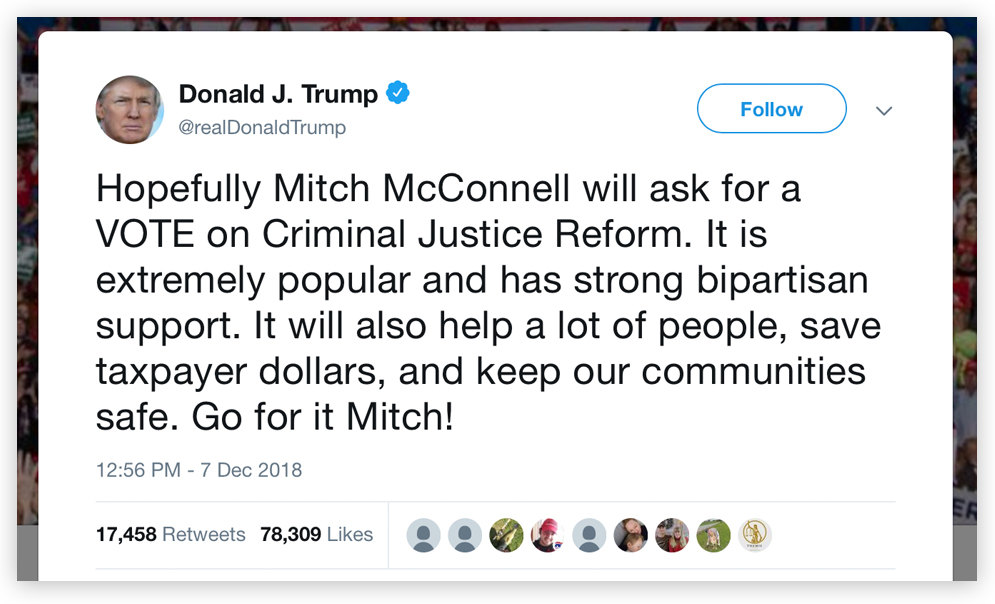
The big news of the week came late on Friday, when President Trump decided to check back in on the bill, and pressured McConnell to bring FIRST STEP to a vote during the crowded lame duck session. After going mostly silent on the bill for several weeks, Trump singled McConnell out on Friday on his Twitter feed:

tweet181210

Trump’s public demands do not guarantee McConnell will bring the bill to a vote. He has told Trump several times that the Senate calendar is too cluttered in December to take up a bill that divides Republicans. As late as Thursday, McConnell had not mentioned the bill at either of two GOP senator meeting, and he has reportedly told senators there’s almost no window to take up the bill this year, according to multiple GOP sources.

One McConnell adviser said the senator does not intend to have a vote on the legislation because he does not have enough time and is more focused on other things — like funding the government and confirming judges. “He doesn’t like the bill,” the Washington Post reported Republican donor Doug Deason, a key White House ally, said of McConnell’s view of FIRST STEP. “He’s a Jeff Sessions-style, lock-them-up-and-throw-away-the-key kind of guy.”

mcconnell180219White House officials say McConnell doesn’t want a vote unless the overwhelming majority of Republicans will vote for it — although both Senate Judiciary Committee Chairman Charles Grassley (R-Iowa) and Sen. Mike Lee (R-Utah) said that 28 or 30 GOP senators support the bill. There are 51 Senate Republicans, and nearly all of the 49 Senate Democrats are expected to back it.

McConnell complained at a Wall Street Journal event last week that such a bill requires a week or ten days to consider, while there are only two weeks left before the planned holiday recess and budget bills that must be passed. FIRST STEP advocates argue that it would only take a few days, with a cloture vote capping debate at 30 hours. McConnell acknowledged support on both sides of the aisle but called the legislation “extremely divisive inside the Senate Republican conference,” with more members undecided or opposed than in favor.

“That’s his calling card, protecting his conference,” said Kevin Ring, president of FAMM. The Atlantic suggested yesterday that while past majority leaders like Lyndon Johnson might have strong-armed their members, McConnell waits for near-unanimity among Senate Republicans. “I think he’s not just looking for 60 votes,” said Brett Tolman, a former U.S. Attorney in Utah who also worked as a GOP Senate staffer and now advocates for criminal-justice reform. “He’s looking for a majority of Republicans.”

But it's not a bad thing.
                   But it’s not a bad thing.

Earlier in the week, FIRST STEP opponents Sen. Tom Cotton (R-Arkansas), John Kennedy (R-Louisiana) and Ted Cruz (R-Texas) seemed to be on a roll, denouncing FIRST STEP as giving immediate release to sexual predators, drug kingpins and gun-toting gangbangers. But Friday, just before Trump’s renewed support,     Sen. Cruz flipped, issuing a press release pledging support:

“I have long supported criminal justice reform. I believe in reducing mandatory minimum sentences for non-violent drug offenders, and providing greater opportunities for offenders to be rehabilitated. At the same time, I do not believe we should be granting early release to violent offenders.

“That is why I drafted an amendment that would exclude violent offenders from being released early. I’m happy to report that, after working closely with the White House and the sponsors of this bill, they have decided to accept my amendment. This new version of the bill resolves my concerns, and is one that I wholeheartedly support and cosponsor.”

firststep180814Also, last Friday a leading FIRST STEP opponent announced his support of key planks of the legislation. Larry Leiser, president of the National Association of Assistant U.S. Attorneys, told the Washington Examiner he supports in principle three of four major sentencing reforms included in FIRST STEP.

The possible turning of the tide seems to have little effect on McConnell’s reluctance to hold a vote. He has angered some GOP senators and created an unusual rift with Sen. Grassley, a longtime McConnell ally. Grassley has spent years building a coalition around FIRST STEP and is pushing hard for a vote this year. “We’ve done what needs to be done,” Grassley said about the overwhelming support for the bill. “So what’s holding it up?”

On Friday, Sen. Lindsey Graham (R-South Carolina) intervened, talking directly to President Trump about attaching the criminal justice legislation to the must-pass year-end spending bill, which is already tangled in a separate fight over funds for the border wall with Mexico. “Just talked with President,” Graham tweeted. “He strongly believes criminal justice reform bill must pass now. He also indicated he supports putting criminal justice reform bill on year-end spending bill which must include MORE wall funding.”

The spending bill will need approval by Dec. 21 to avoid a funding lapse days before Christmas.

On Thursday, Sen. Lee said there were 28 hard “yes” Republican votes plus 49 Democrats for the bill. “It’s rock-solid,” he said. But Sen. John Cornyn (R-Texas), the Senate Republican whip, said more Republicans needed to be convinced. “Right now we have a majority of the Republican conference either undecided or no,” he told reporters. He also continued to call for some changes to the bill.

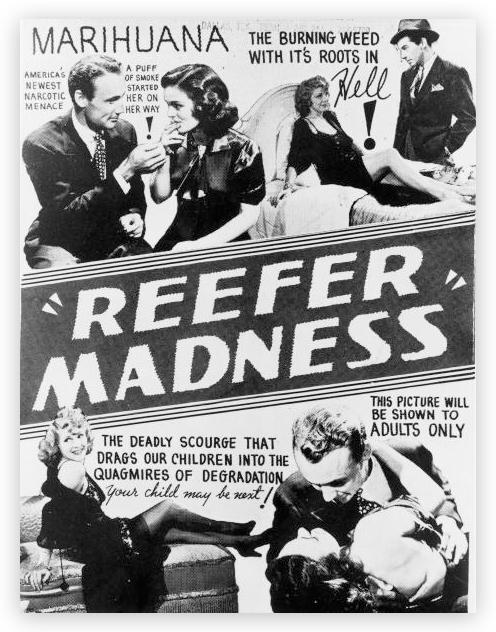
reefer181210Despite Sen. Lee’s assurance that he has 49 Democrat votes in favor of FIRST STEP, The Hill reported Wednesday Democrats who are mulling 2020 presidential bids have split over whether to support FIRST STEP. The decision to support or oppose the bill is a significant policy decision for 2020 Democrat candidates.

Among Republican senators, Sen. Rand Paul (R-Kentucky) told CNN that there’s a generational divide within the party on the issue. “I think there are people who were teenagers in 1937 watching ‘Reefer Madness’ and they’re still concerned that Reefer Madness is going to take over and everybody is going to become zombies, hacking and killing everyone if they smoke pot,” said Sen. Paul, a FIRST STEP supporter. “And then there are a couple of generations after 1937 of people who don’t see it with the same degree of evil.”

The Atlantic, Mitch McConnell Appears to Be Killing Bipartisan Sentencing Reform (Dec. 9)

Politico, Trump leans on McConnell to vote on criminal justice reform (Dec. 7)

The Hill, Criminal justice reform splits 2020 Democrats (Dec. 5)

Washington Examiner, Trump pushes Congress to pass floundering sentencing reform bill (Dec. 7)

Washington Post, McConnell tells White House little chance of Senate vote on criminal justice bill (Dec. 6)

Pittsburgh Tribune, McConnell blocks sentencing bill, upsetting Grassley, GOP (Dec. 7)

– Thomas L. Root

LISAStatHeader2small

Still Some Life Left in FIRST STEP? – Update for November 26, 2018

We post news and comment on federal criminal justice issues, focused primarily on trial and post-conviction matters, legislative initiatives, and sentencing issues.

FELLOW REPUBLICANS URGE MCCONNELL TO PUT FIRST STEP TO A VOTE

intimidation181126Republican senators last week put a full-court press on Senate Majority Leader Mitch McConnell (R-Kentucky) to bring the modified FIRST STEP Act to the Senate floor before Congress adjourns for the year on Dec. 14. 

[Update: The Senate Judiciary Committee reported the modified FIRST STEP Act, now S.3649, to the floor on Monday, November 26, 2018].

McConnell has been coy about the bill’s prospects, even with the backing of President Donald Trump and his son-in-law and senior adviser, Jared Kushner. McConnell’s intransigence in the face of Trump’s urging and the demands of his own party could open a new divide between McConnell and Trump weeks after they worked together to widen the Senate majority in the midterm elections.

If the Senate does not pass FIRST STEP in the next two weeks, the bill would have to be reintroduced in January, and would a Democrat-controlled House that would probably include a lot of sentencing reform provisions that would be non-starters in the Senate.

“This really does need to get done this year,” Sen. Mike Lee (R – Utah) said in an interview. “Saying that we’ll do it next year is tantamount to saying this just isn’t going to get done.”

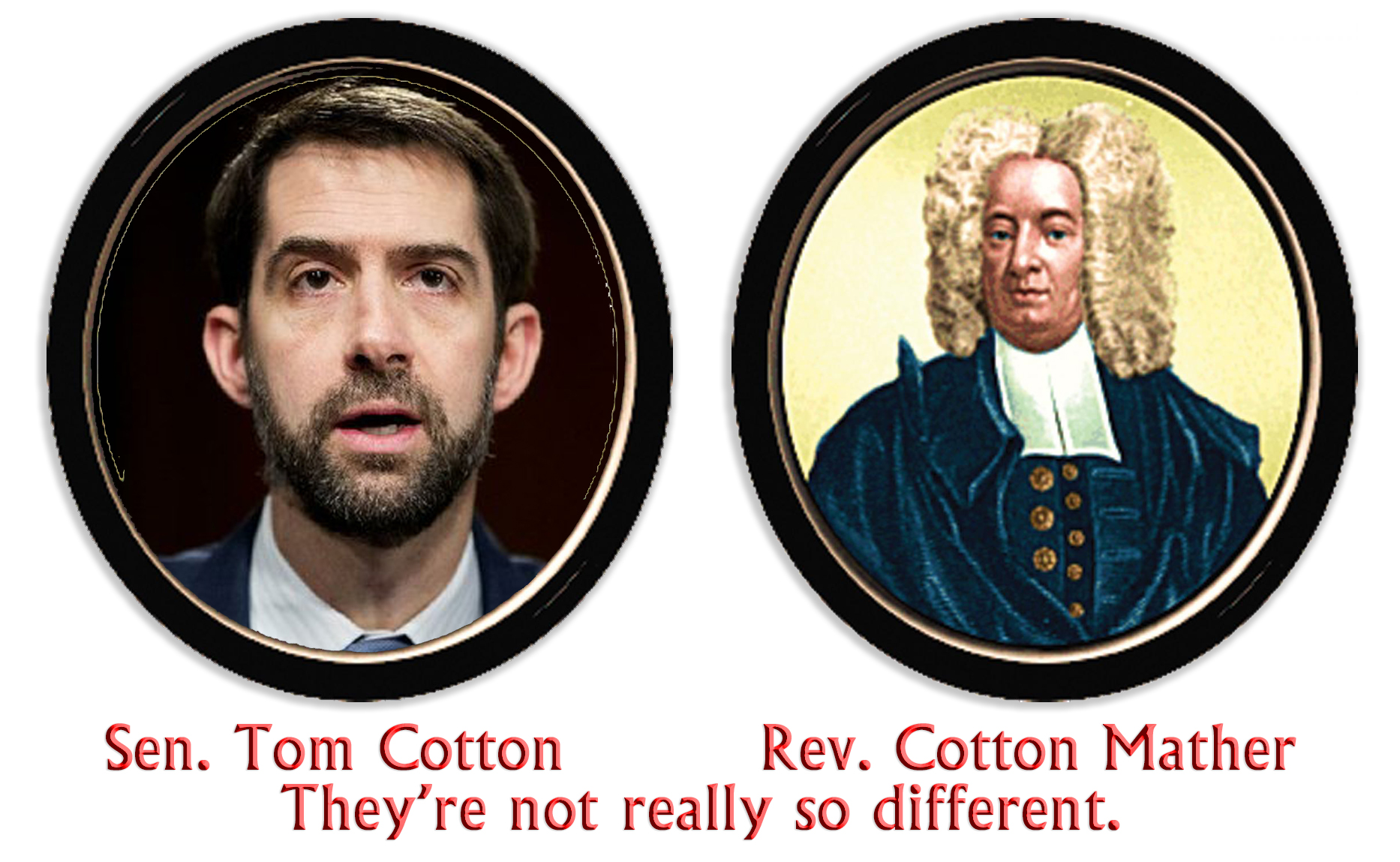
In general, McConnell doesn’t like voting on legislation that divides Senate Republicans. FIRST STEP has been controversial among a few conservative Republicans for months, even sparking a Twitter argument between Lee and Sen. Tom Cotton (R – Arkansas), last Monday.

“Unaccountable politicians and those who live behind armed guards may be willing to gamble with your life,”  Cotton wrote in a USA Today op-ed piece Nov. 15. “But why should you?”

cotton171226And Sen. John Kennedy (R-Louisiana) argued earlier this month, “A dangerous person who is properly incarcerated can’t mug your sister. If we’re not careful with this, somebody is going to get killed.”

In the past three years, Sen. Charles E. Grassley (R-Iowa), chairman of the Judiciary Committee, blocked a Democratic Supreme Court nominee, pushed through an army of conservative judges and secured confirmation two Trump nominees.

Grassley had some chits to call in when he spoke to McConnell last Monday morning about FIRST STEP. I have been there for you, Grassley told McConnell, and I would hope this is something that you would help me make happen, the New York Times reported that three people familiar with the call said.

Meanwhile, Sen. Lindsey Graham (R-South Carolina) told NBC a week ago that he’s confident FIRST STEP would receive 80 votes in the Senate, and would be a positive first step for the government in the wake of a contentious midterm election cycle. “Let’s start 2019 on a positive note,” Graham said. “I’m urging Sen. McConnell to bring the bill to the floor of the Senate. It would get 80 votes. Mr. President, pick up the phone and push the Republican leadership… The Republicans are the problem here, not the Democrats.”

FIRST STEP proponents fear McConnell will let the short window for consideration this year slide shut rather let a vote go forward on a complicated issue that divides Republicans. Republican senators allied with Grassley, including Lee, Graham and Tim Scott of South Carolina, began last week to contact wavering colleagues by phone. Kushner convened a call with business groups to praise the changes, and the White House circulated a USA Today op-ed that Kushner wrote with Tomas J. Philipson, a member of the White House Council of Economic Advisers. Donald Trump Jr. and Ivanka Trump, the president’s eldest son and daughter, blasted supportive messages to their millions of Twitter followers urging Congress to move quickly.

firststepslamduck181126Kushner reportedly plans to ask Trump to lobby McConnell directly by phone, but is waiting to line up more Republican support first, according to two people familiar with his thinking. Trump is not waiting for Kushner’s request, already using Twitter last Friday to urge McConnell and Minority Leader Chuck Schumer to pass the “badly needed” criminal justice reform bill.

McConnell has not yet budged. In a statement Friday, a spokesman for McConnell told The New York Times: “The support for, and length of time needed to move the new bill is not knowable at this moment.”

Earlier this month, McConnell told the Louisville Courier Journal, “We don’t have a whole lot of time left, but the first step is to finalize what proponents are actually for. There have been a lot of different versions floating around. And then we’ll whip it and see where the vote count is.”

Wall Street Journal, McConnell Controls Fate of Criminal-Justice Overhaul Bill (Nov. 20, 2018)

CNBC, Trump pushes Mitch McConnell and Chuck Schumer to pass ‘badly needed’ bipartisan criminal justice reform bill that’s stalled in the Senate (Nov. 23, 2018)

The New York Times, McConnell Feels the Heat From the Right to Bring Criminal Justice Bill to a Vote (Nov. 20, 2018)

The Hill, Graham urges GOP leadership to bring vote on criminal justice reform (Nov. 18, 2018)

– Thomas L. Root
LISAStatHeader2small

Cotton’s Price is Too High – Update for November 20, 2018

We post news and comment on federal criminal justice issues, focused primarily on trial and post-conviction matters, legislative initiatives, and sentencing issues.

COTTON SAID TO HAVE NAMED HIS PRICE FOR SUPPORTING FIRST STEP

cotton181120If the modified FIRST STEP Act makes it to the floor of the Senate, a likelihood that is dimming day by day, Sen. Tom Cotton (R-Arkansas) has already staked out his price for abandoning his vitriolic opposition to the bill. Cotton and former Attorney General Jefferson Beauregard Sessions III, recently departed from DOJ, have been the most ardent foes of FIRST STEP and the Sentencing Reform and Corrections Act of 2017. Now, Sen. Cotton is the last man standing.

Cotton has maintained his opposition to FIRST STEP — a sweeping package of criminal-justice reforms designed to reduce incarceration rates and recidivism — despite broad bipartisan support, even provoking a Twitter war yesterday with Sen. Mike Lee (R-Utah), a former federal prosecutor who strongly supports FIRST STEP and co-sponsored the doomed SRCA (which donated several provisions to the modified FIRST STEP).

In defending his opposition on Twitter yesterday, Cotton accused FIRST STEP’s proponents of trying to push the measure through Congress without allowing time for an adequate review of its contents, and warned that it would grant early release to fentanyl dealers, violent criminals and “criminal immigrants” (as though non-citizens convicted of felonies are not promptly deported after their sentences are completed). Lee accused Cotton’s criticisms of being “fake news.”

pricesIt turns out that Cotton had a price, albeit it a high one, for remaining neutral on FIRST STEP. Ohio State University law professor Doug Berman wrote at his Sentencing Law and Policy Blog Sunday that Cotton previously offered to remain neutral or even support FIRST STEP if the bill were modified to (1) exclude heroin and fentanyl traffickers from early release for programming credits; (2) make the change from 47 to 54 days of good time non-retroactive; (3) adjust the weight of fentanyl under the drug trafficking statute (21 USC 841(b)) to reflect its potency; and (4) fix the Armed Career Criminal Act to undo the Johnson holding.

Berman wrote that the proposals (except for a part of the first one) were rejected by FIRST STEP sponsors.

Meanwhile, the Democrats’ recapture of the House in the midterm elections complicates FIRST STEP’s chances. Many progressive Democrats and advocacy groups opposed the FIRST STEP Act in the House and insisted that it include stronger sentencing reforms. Many of those same lawmakers would like to see the sentencing reforms in the Senate version be made retroactive, something that would almost surely reignite conservative opposition to the bill.

flipflop170920Sens. Cory Booker, D-New Jersey, and Kamala Harris, D-California, who are both running for president, have opposed criminal justice. Harris claims now to support reform, but she opposed it as California’s attorney general. Booker, who claims to support reform in principle, seems to be calculating whether its passage will help or harm his presidential campaign.

The Washington Examiner, however, predicted last week that “if Trump applies pressure, he will find that the numbers are there in Congress to defeat both Cotton’s faction and the Democrats in opposition – specifically, the ones blocking reform because it would hurt their own presidential bids if it passes during Trump’s presidency.”

Reason.com, Trump Endorses Criminal Justice Bill, Giving Momentum to Long-Delayed Reforms (Nov. 14, 2018)

Washington Examiner, Trump is right to embrace criminal justice reform (Nov. 15, 2018)

National Review, Mike Lee Accuses Tom Cotton of Spreading ‘Fake News’ on Criminal-Justice-Reform Bill (Nov. 19, 2018)

– Thomas L. Root

LISAStatHeader2small

The Sell Begins For and Against FIRST STEP – Update for October 23, 2018

We post news and comment on federal criminal justice issues, focused primarily on trial and post-conviction matters, legislative initiatives, and sentencing issues.

LISAStatHeader2small

POLITICKING STARTS FOR COMPROMISE FIRST STEP ACT

Although most political news is focused on the mid-term elections in 15 days, drumbeats of support for the Senate to pass the compromise FIRST STEP Act after election day are increasing.

firststep180814A survey released last week shows widespread support for the provisions in FIRST STEP, in sharp contrast to the National Association of Assistant United States Attorneys’ survey we wrote about last week.

A national survey of 1,234 registered voters conducted online between Oct. 11-12 found 82% of respondents approved of specific FIRST STEP provisions. Additionally, 82% supported allowing non-violent offenders to finish their sentences in home confinement in order to ease their integration back into society, and 76% agreed with expanding the number of good-time days. Most important for political pressure purposes, 53% of respondents said that if the Republican-controlled Senate fails to pass FIRST STEP, they will view the Republicans more negatively.

But despite support from a large number of Republicans, conservative groups, and the White House, FIRST STEP faces stiff opposition from the Justice Department and staunch law-and-order conservatives such as Sen. Tom Cotton (R-Arkansas), who especially oppose reductions in mandatory minimums.

sentence181023Fortuitously, HBO aired a documentary last Sunday night (Oct. 21) called The Sentence, which has already been shown at Sundance Film Festival. The Sentence chronicles the aftermath of filmmaker Rudy Valdez sister’s drug conspiracy sentence and the consequences of mandatory-minimum sentencing. Cindy Shank received 15 years for conspiracy charges related to crimes committed by her deceased ex-boyfriend. The film follows the Valdez family’s effort to win Cindy clemency during the last months of the Obama administration.

“Two days after airing the film at Sundance,” Valdez said last week, “a Republican Senator (Mike Lee, R-Utah) reached out to me the say ‘thank you for making this movie’. You know, this is not a party issue, this film is apolitical, both Republicans and Democrats are coming together to fix this broken issue. I’ve been invited to speak many times on Capitol Hill, to share what I know with legislatures, to put a face on the victims, and show the effects of the federal minimum sentencing guidelines. Hopefully, by opening their eyes to the devastating effects of the federal minimum sentencing guidelines, it will help our lawmakers craft even more new legislation that actually gives Federal judges the ability to dole out fair and just punishment, with an emphasis on rehabilitation.”

An op-ed piece in USA Today last week by FAMM president Kevin Ring expanded on The Sentence’s theme of the effect long prison sentences have on inmates’ children. Ring, a former Capitol Hill lobbyist who served a federal sentence, wrote about the effect on his children of his own imprisonment, admitting that “I ended up serving time with people whose unnecessarily long sentences were caused by the laws I helped write.”

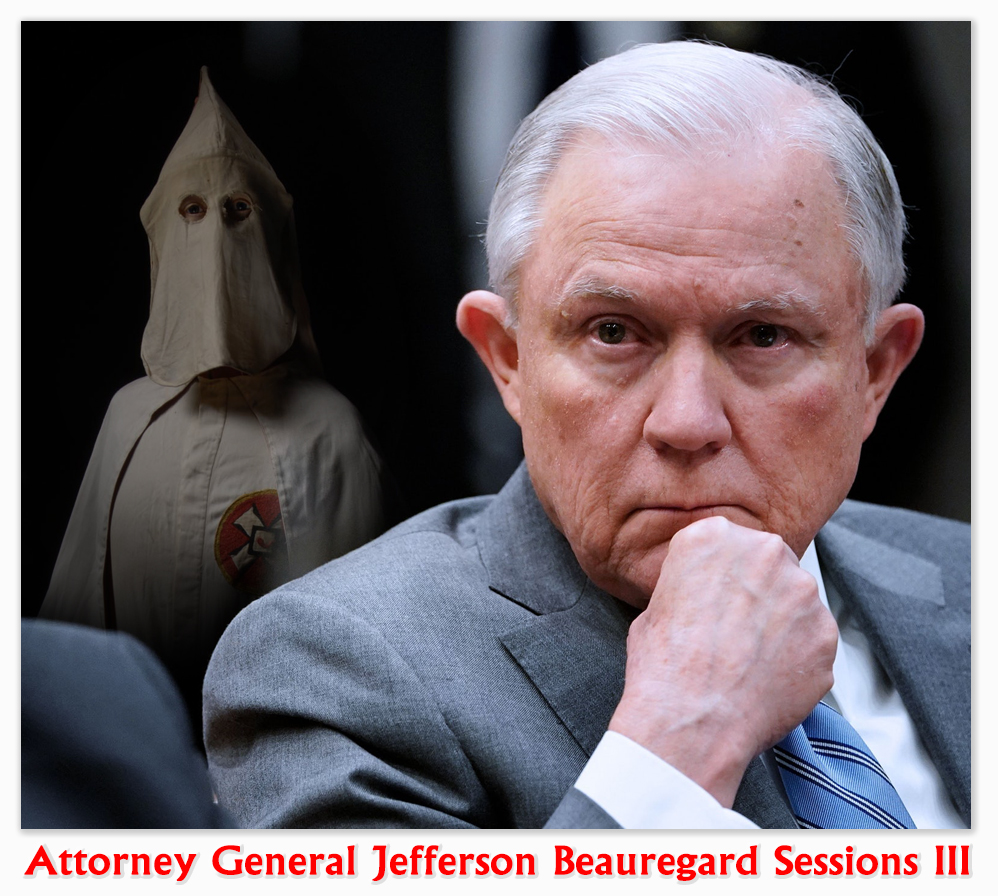
sessions180322Meanwhile, different drumbeats continue to sound a death knell for Attorney General Jefferson Beauregard Sessions III. The New York Times published a long story last Friday reporting how “discontent and infighting have taken hold at the Justice Department, in part because Mr. Sessions was so determined to carry out that transformation that he ignored dissent, at times putting the Trump administration on track to lose in court and prompting high-level departures… President Trump has exacerbated the dynamic, they said, by repeatedly attacking Mr. Sessions and the Justice Department in baldly political and personal terms. And he has castigated rank-and-file employees, which career lawyers said further chilled dissent and debate within the department.” Observers say it is almost a certainty that Sessions, a staunch opponent of sentencing reform, will resign after the mid-terms.

Reason.com, Poll Shows Wide Support for Criminal Justice Reform Bill in Congress (Oct. 18, 2018)

The Poll

USA Today, I once wrote mandatory minimum laws. After ties to Abramoff landed me in prison, I know they must end. (Oct. 16, 2018)

The Knockturnal, The Sentence’ Goes to Capitol Hill (Oct. 18, 2018)

The New York Times, Justice Dept. Rank-and-File Tell of Discontent Over Sessions’ Approach (Oct. 19, 2018)

– Thomas L. Root

LISAStatHeader2small

Trump Speaks… Will Criminal Justice Reform Become Law? – Update for August 6, 2018

We post news and comment on federal criminal justice issues, focused primarily on trial and post-conviction matters, legislative initiatives, and sentencing issues.

LISAStatHeader2small

TRUMP BREAKING CRIMINAL JUSTICE REFORM LOGJAM?

President Trump told Republican senators last Wednesday that he’s open to a proposal on prison and sentencing reform that combines the FIRST STEP Act with provisions of the Sentencing Reform and Corrections Act of 2017, giving new life to criminal justice reform that had seemed hopelessly stalled on Capitol Hill.

trumplogjam180806The compromise presented to President Trump by Republican senators at a White House meeting on Wednesday would combine the FIRST STEP Act with four sentencing reform provisions that have bipartisan Senate backing, according to a source familiar with the meeting.  

A senior White House official described the president as “positively inclined” toward the compromise proposal. The source said Trump told GOP senators to “do some work with your colleagues” and “let’s see where the Senate is and then come back to me with it.”

The White House meeting with Republican senators included Mike Lee (Utah), Lindsey Graham (South Carolina), and Senate Judiciary Committee chairman Charles Grassley (Iowa).

Trump’s support is significant because the core group of Republicans and Democrats behind the Senate bill has insisted on including sentencing reform as part of any criminal justice legislation, but Senate Majority Leader Mitch McConnell (R-Kentucky) is not about to bring a bill to the floor if there is vocal opposition from either the White House or the Republican caucus. “The question is whether there [are] enough sentencing provisions in there to make those guys happy without turning off too many Republicans and making it too toxic for McConnell to put on the floor,” says Alex Gudich, deputy director of #Cut50, a criminal justice advocacy group.

The Hill reports that some of the bill backers now think there’s a possibility of moving the modified legislation through the Senate as soon as this month, although it’s more likely be delayed until the lame-duck session after the midterm elections, that starts in mid-November.

cotton171226Conservatives such as Sen. Tom Cotton (R-Ark.) and Attorney General Jeff Sessions have opposed combining prison and sentencing reform. Cotton argued in a speech at the Hudson Institute earlier this year that “if anything, we have an under-incarceration problem.”

Meanwhile. the Washington Free Beacon published a leaked letter from the Dept of Justice to the White House outlining its concerns about the FIRST STEP Act. “In the Department’s view,” the letter says, “this legislation, if passed in its current form, would further and significantly erode our long-established truth-in-sentencing principles, create impossible administrative burdens, effectively reduce the sentences of thousands of violent felons, and endanger the safety of law-abiding citizens and law enforcement officers.”

The DOJ letter also tied the declining federal prison population to rising crime rates. “The number of federal inmates has declined more than 16% since 2013 and is at its lowest level since 2004,” the letter reads. “It is likely no coincidence that, at the same time, we are in the midst of the largest drug crisis in our nation’s history and recently experienced the two largest single-year increases in the national violent crime rate in a quarter of a century.”

sessions180322Conservative groups supporting criminal justice reform pushed back against the DOJ letter. FreedomWorks rebutted the report, saying, “Simply put, correlation doesn’t equal causation.” And when reporters asked Grassley today about his former Senate colleague Sessions’ efforts to derail the criminal justice legislation, Grassley responded sharply, “With all that I have done to help Sessions, to keep the president from firing him, I think Sessions ought to stay out of it.”

Criminal justice reform groups have been bolstered by a poll released last week by Freedom Partners, a nonprofit group that funds conservative and libertarian causes, showing 70% of voters nationwide think the Senate should pass the FIRST STEP Act.

Ohio State University law prof Doug Berman said in his Sentencing Law and Policy blog this past weekend, “I am not counting any sentencing reform chickens before they hatch, but this description of the compromise combo FIRST STEP Act and SRCA would seem to make a lot of sense in light of various positions staked out on both sides of the aisle. And if Prez Trump signals support for such a reform package and is willing to make it a priority, I would now be inclined to predict this will get done this year. But because Prez Trump has never seemed a serious advocate for sentencing reform, and because his Attorney General likely dislikes all of this, and because the run-up and aftermath of an election can disrupt lots in DC, I am inclined to remain pessimistic about all of this until votes are being scheduled and taken.”

The Hill, Trump gives thumbs up to prison sentencing reform bill at pivotal meeting (Aug. 3, 2018)

Reason, The White House Is Moving Forward on Prison Reform Despite Justice Department Resistance (Aug. 2, 2018)

Sentencing Law and Policy, Encouraging news from DC about prospects for prison reform with sentencing reform getting enacted in 2018 (Aug. 4, 2018)

– Thomas L. Root

LISAStatHeader2small

More Steps Taken on FIRST STEP? – Update for June 13, 2018

We post news and comment on federal criminal justice issues, focused primarily on trial and post-conviction matters, legislative initiatives, and sentencing issues. 

LISAStatHeader2small
THE WIND MAY BE SHIFTING

imageWe have previously reported that the prison reform bill named FIRST STEP Act, H.R. 5682, faces a tough battle in the Senate, starting with the unwillingness of Senate Majority Leader Mitch McConnell to bring it to a vote, and Senate Judiciary Committee Chairman Charles Grassley (R-Iowa) pledging that no FIRST STEP Act will pass without the Sentencing Reform and Corrections Act (S.1917) being written into FIRST STEP’s provisions.

But it was a wild week in the nation’s capital last week, and as a result, the goal may be closer than ever. In one of Washington’s most interesting plot twists, historic criminal justice reform legislation now finds itself atop Trump’s policy agenda, and one floor vote away from his signature.

A detailed story in Foreign Affairs last week suggested that a deal that includes some first-step changes to harsh sentencing laws is now likelier in the wake of the Alice Johnson commutation of the life sentence of Alice Marie Johnson. Even Sessions has said he could support reforms to “stacking” provisions in 18 USC 924(c), which results in first-timers getting three or more stacked 924(c) enhancements for a single course of conduct, with sentences of 62 years or more for what should be a 12-year bit.

While the SRCA proposal to reform what are generally (and misleadingly) called “851” enhancements (provisions in 21 USC 841(b) that double mandatory minimum sentences for prior state felony drug convictions), might not make it, a compromise could include a broader safety valve, which would give judges more discretion to depart from mandatory minimums when circumstances warrant.

compromise180614Senators Mike Lee (R-Utah) and Rand Paul (R-Kentucky), both longtime SRCA supporters, will be key brokers in any deal. Lee could help bring Democrats such as SRCA supporters Richard Durbin (D-Illinois) and Cory Booker (D-N.J.) to the table, and Paul shares a backyard with McConnell, who will determine if the bill even gets a vote.

Also heartening was McConnell’s unpopular announcement last week that the Senate will not take the month of August off, as it usually does, but instead stay in town to complete a lot of unfinished business.

cotton171226All is not roses, however. Senator Tom Cotton (R-Arkansas), one of the few Americans who believes the country has an “underincarceration problem,” has mounted a guerrilla campaign to undermine FIRST STEP’s support on the right. For example, he is reportedly pushing law-enforcement groups to oppose the bill. His efforts have borne fruit recently, as the Federal Law Enforcement Officers Association withdrew its endorsement of the bill after being pressured by Cotton’s office. Also, last week, the National Association of Assistant U.S. Attorneys slammed FIRST STEP, but that group hardly needed Cotton’s urging to do so.

Foreign Affairs, The Art of a Deal on Criminal Justice Reform (June 8, 2018)

Townhall, The FIRST STEP Prison Reform Bill Should Be a No-Brainer (June 8, 2018)

National Review, A Prison-Reform Bill Passed the House 360–59. It’ll Probably Die in the Senate (June 6, 2018)

– Thomas L. Root

 LISAStatHeader2small

Congress to Try, Try Again on Sentencing Reform – Update for September 21, 2017

We post news and comment on federal criminal justice issues, focused primarily on trial and post-conviction matters, legislative initiatives, and sentencing issues.

LISAStatHeader2small
WE’RE BACK, BABY!

wereback170921After serving as a showpiece for what great bipartisanship can accomplish, the Sentencing Reform and Corrections Act of 2015 foundered on the shoals of presidential campaign politics last year, never making it to a floor vote in the Senate due to the fears of Majority Leader Mitch McConnell (R-Kentucky) that the vote could tarnish Republicans at the polls.

The bill, originally introduced in 2015, would cut mandatory minimum sentences for certain drug offenses and armed career criminals while increasing mandatory minimums for other offenses such as domestic violence. The bill was watered down early on in the process to satisfy law-and-order senators by eliminating any retroactive provisions. In other words, changing the law so that newly convicted people would not face unintended “stacked” mandatory minimums made sense, but relieving sentences of people who were given those “stacked” sentences the day before the bill passed did not.

flipflop170920Watered down or not, the SRCA fell to demagoguery from the likes of Sen. Ted Cruz (R-Texas), who supported the measure before he started running for president, but then opposed it on the campaign trail. An even greater foe was then-Sen. Jefferson Beauregard Sessions III, who is now Attorney General.

Nevertheless, building on the Senate’s success in repealing Obamacare and passing comprehensive tax reform, some U.S. senators are now planning to take a second stab at passing a bipartisan criminal justice reform bill after it stalled amid GOP infighting. Sens. Dick Durbin (D-Illinois) and Chuck Grassley (R-Iowa) said Tuesday that they will reintroduce the SRCA, but they did not specify exactly when.

“While the political landscape in Washington has changed, the same problems presented by the current sentencing regime remain,” Grassley said. Despite the fact the bill has been worked on now over three different congresses, Durbin believes it the “best chance in a generation to right the wrongs of a badly broken system.”

The bill cleared the Senate Judiciary Committee in 2015, with Sen. John Cornyn (R-Texas) – one of the co-sponsors – predicting it would come to a floor vote soon afterwards. As Senate law-and-order conservatives started taking whacks at it, House Speaker Paul Ryan (R-Wisconsin) questioned whether the House would even be willing to debate the version of SRCA the Senate was cooking up. The bill died with the end of the last congress.

Starting with the day after its death last January, Grassley and Durbin began expressing interest in reviving the criminal justice bill. Along with Sen. Mike Lee (R-Utah), reportedly met with President Trump’s son-in-law and senior adviser Jared Kushner last March to discuss the issue. Kushner has a special interest in federal criminal justice reform.

sessions170918The push to pass the criminal justice reform bill could set up a potential fight with the Dept. of Justice, and Sessions, who was one of the leading opponents against the legislation when he was a member of the Senate. It is not known how much influence the AG still has with the President, who thinks Sessions is both “weak” and an “idiot.”

Sen. Thom Tillis (R-North Carolina), another supporter of the criminal justice reform effort, speculated last January that Sessions as attorney general would have as a chief objective enforcing what Congress sends him — even if he disagrees with it — rather than slipping into the role of legislator and try to change the laws. “He’s going to be focused on being the nation’s top law enforcement official,” Tillis said. “I don’t necessarily see him weighing in heavily on public policy choices that President Trump makes.”

The Hill, Senators to reintroduce bipartisan criminal justice bill (Sept. 19, 2017)

– Thomas L. Root

LISAStatHeader2small