We post news and comment on federal criminal justice issues, focused primarily on trial and post-conviction matters, legislative initiatives, and sentencing issues.

‘ALL THEM GAYS AND MEXICANS’ IS NOT QUITE STRUCTURAL ERROR, BUT IT’S NOT HARMLESS, EITHER
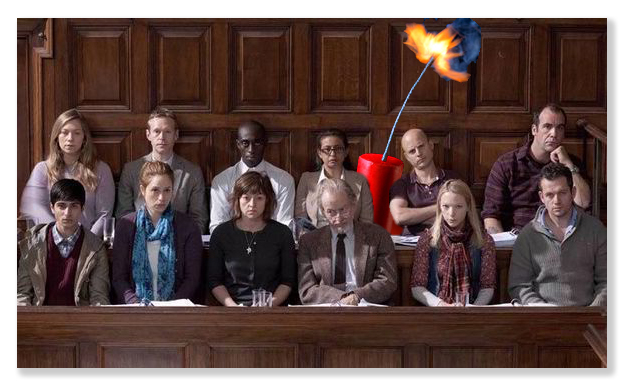
 Andres Sanchez was on trial for tax fraud. During deliberations, one unenlightened juror told the others, “Can you believe all those people like them gays down in California are coming up here?” Another said, “Yeah. And anyway, the Mexicans, all they want to do is screw us over anyway.”
Andres’s lawyers argued that the comments reflected jury racial bias (not to mention homophobia, which had nothing to do with the trial) and that such bias introduced structural error into the trial. Structural error is the holy grail of error, a defect so basic that it entitles a defendant to a new trial whether he or she could show the error affected the outcome.
The district court threw the racist juror off the panel before a verdict was reached, and later – after Andres was convicted – denied a new trial on the grounds that he could not show the racist comment affected the jury’s verdict.
Last week, the 9th Circuit reversed.
The Government argued that a simple standard applied by the district court was the correct one, that the verdict should be reversed only if the defendant could show that the dismissed juror’s racial bias affected the verdict. The defense argued that juror bias – even if caught before the jury reached a verdict – was structural error.
The 9th Circuit split the difference. It held that where the bias was caught before a verdict, the error was not structural. However, following the 1954 Supreme Court decision in United States v. Remmer – which requires that a court apply “a heavy presumption of prejudice” where a jury has been tampered with by an outside party – the 9th ruled that Andres should get a new trial.
 “Remmer applies when the “jury taint originates from within the jury itself”—including when the alleged taint arises from jurors’ exposure to the partiality of another juror who was removed before deliberations,” the Circuit ruled, rejecting a government attempt to apply a case of attempted juror bribery from United States v. Shapiro. “To the extent the Government argues that Remmer should not apply where the source of juror taint is racial bias, rather than corruption, we disagree. In Shapiro, the juror was “tainted” because he was willing to acquit for improper reasons. The racially biased juror here was similarly willing to convict for improper reasons. If a different standard is required, racial bias should be subject to a more stringent prejudice standard than other forms of juror taint, not a lesser one.’
United States v. Sanchez, Case No. 23-2533, 2026 U.S.App. LEXIS 13615 (9th Cir. May 12, 2026)
United States v. Remmer, 347 U.S. 227 (1954)
United States v. Shapiro, 669 F.2d 593 (9th Cir. 1982)
~ Thomas L. Root
 Simon Brewster was on trial in state court for bank robbery. The jury went out, but reported to the judge a few hours later that it was hopelessly deadlocked 9-3 for conviction. The judge gave the jury the