We post news and comment on federal criminal justice issues, focused primarily on trial and post-conviction matters, legislative initiatives, and sentencing issues.

IT LOOKS LIKE A VICTORY, BUT NOT MUCH OF ONE…
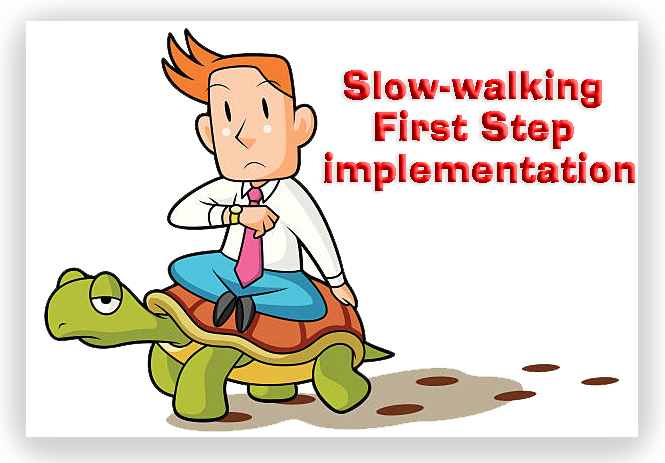 One of the marquee features of the First Step Act is an earned time provision that permits non-excluded federal inmates (and there’s a long list of who’s excluded, from people with gun and violence charges to sex offenders to some kinds of drug dealers) to earn credits that will reduce their sentence lengths or get them more halfway house or home confinement.
The plain terms of First Step said that qualifying programs completed after the Act’s passage would be counted. But ever since First Step passed, the Bureau of Prisons has done its institutional best to slow-walk implementation of the terms. First, it took nearly every day of the two years it was given by the statute to adopt a recidivism and needs assessment system that would classify inmates according to their risk of recidivism. Then, although the BOP is a system in which virtually no inmate works an 8-hour day, the BOP decided that a day of programming (for purposes of earned-time credits awarded in blocks of 10 or 15 days for every 30 days of programming) should constitute a full eight hours. This meant that an intensive 9- or 10-month drug program that in all devoted 500 hours to the classroom would yield a paltry 62.5 days of programming credit, which would be two 30-day blocks, which would award an inmate 20 to 30 days off a sentence that, on average, would be 10 years long.
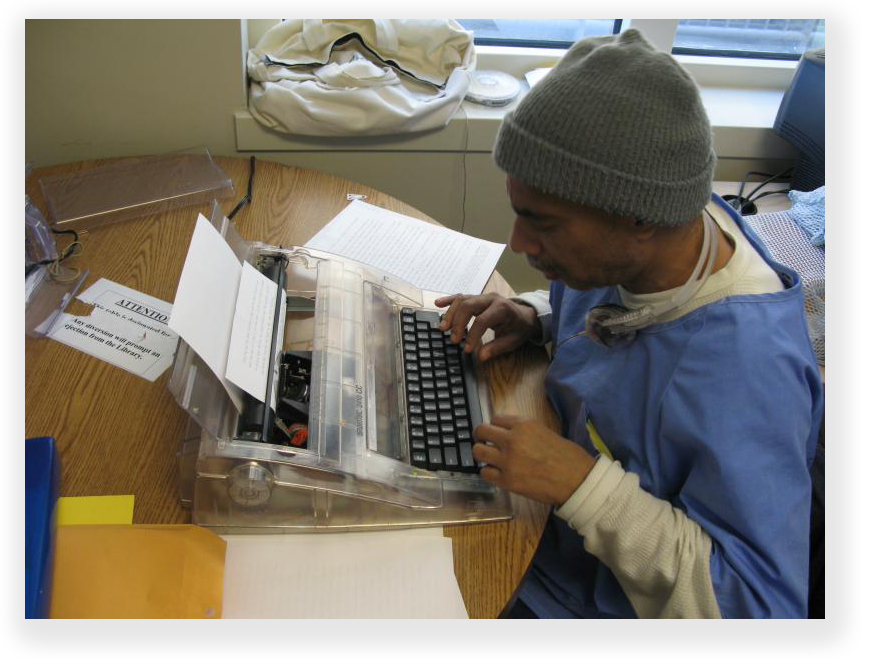 The BOP’s latest indignity seems to be an institutional position that none can start earning credit until after January 15, 2022, because the earned-time system is to be phased in over two years, and the two years started January 15, 2020. Late last summer, an inmate at FCI Fort Dix won a habeas corpus action against the BOP authorizing him to get credit for programs completed since First Step was enacted in 2018. Ever since that decision, Goodman v. Ortiz, was handed down, suing the BOP for earned time credits for completed programs has become a cottage industry at various institutions. In South Dakota (where there isn’t a lot else to do in the winter, even when you aren’t locked down for COVID), there are something like 34 habeas corpus suits pending demanding earned time credit.
The inmate winner in a recent decision from the same judge who wrote Goodman v Ortiz called his victory to my attention last week. It is not quite the triumph one might think it is.
Jeremy Hare filed a habeas action under 28 USC § 2241 against his warden, demanding a shortened sentence or other benefit for having completed programs since the passage of the First Step Act. The government, predictably enough, argued that Jeremy could not get credit for any program completed before January 15, 2020 (although to its credit, the US Attorney was unwilling to adopt the BOP’s position that no credits would be awarded until 2022). But the government did take the untenable position that the First Step Act was not really “enacted” until the BOP said it was, a position the Court dispatched handily:
Enactment means “the action or process of making into law.” ENACTMENT, Black’s Law Dictionary (11th ed. 2019). The FSA was enacted on December 21, 2018, and nothing in subchapter D indicates a different effective date for the subchapter… Thus, 18 U.S.C. § 3632(d)(4)(B)(i) unambiguously directs that “[a] prisoner may not earn time credits… for an evidence-based recidivism reduction program that the prisoner successfully completed… prior to” December 21, 2018… There is no ambiguity here. As a result, if Petitioner successfully completed an EBRR [Evidence-Based Recidivism Reduction] program or PA [Productive Activity] pursuant to the FSA on or after December 21, 2018, he is entitled to earn Time Credits.
The District Court thus agreed with Jeremy that he was entitled to credit for programs completed after “enactment” of the First Step Act, regardless of how long it may have taken the BOP to actually adopt PATTERN.
 But that was the high-water mark for Jeremy. The Court ruled that Jeremy could only get credit for programs that addressed needs BOP staff had already identified for him. That could include substance abuse, basic education and whatever else may have been listed in his Program Review by BOP staff. That holding dramatically limited the courses he might otherwise get credit for, because before January 15, 2021, the staff did not routinely make such determinations.
But what really limited the reach of Jeremy’s win was the Court’s conclusion that the BOP calculation that one program day should equal eight full hours of programming was a reasonable one. Jeremy wanted credit for any day on which he might have attended a program, even if that program only lasted an hour. The court found the BOP’s calculation that a “program day” should be 8 hours long was completely reasonable.
The most liberal read of this decision is that inmates might get some credit for programs completed since December 21, 2018, but they will have to jump through plenty of hoops first, and the amount of credit they get may be slight.
Hare v, Ortiz, Case No 20-14093, 2021 US Dist LEXIS 21270 (DNJ Feb 4, 2021)
– Thomas L. Root