We post news and comment on federal criminal justice issues, focused primarily on trial and post-conviction matters, legislative initiatives, and sentencing issues.

HOW VIOLENT IS KIDNAPPING?
 In a world where people wearing blowup costumes holding signs are violent anarchists while others smashing the doors of the Capitol are peaceful tourists, it was perhaps inevitable that a federal court would hold that kidnapping a family of four, zip-tying the parents and holding a gun to a 3-year-old girl’s head in order to find out where the family money was hidden, is not a categorical crime of violence.
This is the latest in a decade-plus saga of Killiu Ford. Killiu is perhaps pronounced “kill you,” an unfortunately apt name for the defendant. As noted, Killiu and his co-defendants abducted a family at gunpoint, robbing them of $30,000.
The district court sentenced Killiu to 600 months in prison, 216 months for two counts of kidnapping the parents, 300 months consecutive for two counts of kidnapping the kids, and 84 months on an 18 USC § 924(c) firearm conviction, consecutive to the other sentences. Later, the government conceded that the § 924(c) conviction had to be vacated because kidnapping was not a violent crime under the statute. The 10th Circuit remanded Killiu ‘s case for resentencing.
 On remand, the district court reduced Killiu’s 600-month sentence by 84 months, down to 516 months in prison. But the judge said Killiu deserved a bigger reduction due to his significant rehabilitation during the 12 years he had already spent in prison. But the prosecutor argued that the court was obligated under 18 USC § 3559(f)(2) to impose a mandatory minimum 25-year sentence for each of the two kidnapping convictions involving the children.
Killiu argued that the district court was not obligated to impose mandatory-minimum 25-year sentences and requested instead a downward variance to 240 months.
The district court ruled that § 3559(f)(2) required a mandatory minimum 25-year (300-month) sentence for each of the kidnapping convictions involving the children. In light of that, the court imposed a 300-month sentence for each of Killiu ‘s remaining five convictions, all to run concurrently.
Under § 3559(f)(2), someone convicted of a crime of violence that is kidnapping as defined by the federal kidnapping statute, 18 USC § 1201, shall “be imprisoned for life or any term of years not less than 25.” But § 1201 does not define “crime of violence.” The 10th Circuit concluded that when § 1201 was passed, 18 USC § 16(a) – which defines “crime of violence” – was already on the books. The fact that Congress did not separately define “crime of violence” in § 3559(f) suggests that it was satisfied with the § 16(a) definition.
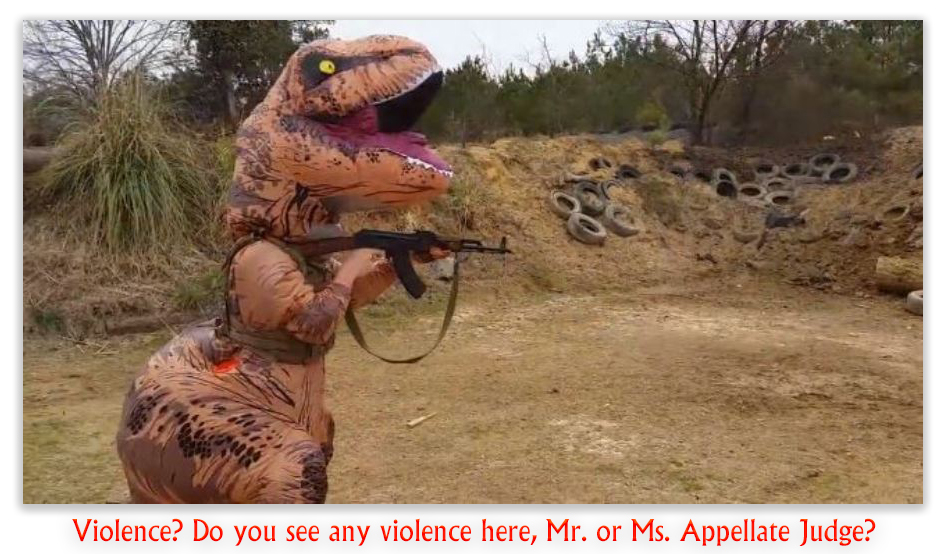
Using that definition, the 10th Circuit said, “courts have consistently found that a person can commit kidnapping without the use, attempted use, or threatened use of force. For example, a person can commit kidnapping by inveigling—that is, luring, or enticing, or leading the person astray by false representations or promises, or other deceitful means… [B]ecause kidnapping can be committed by “inveigling,” a kidnapping offense does not categorically have as an element the use, attempted use, or threatened use of physical force against the person or property of another.
Killiu’s case was remanded for resentencing.
United States v. Ford, Case No. 23-1400, 2025 U.S. App. LEXIS 28174 (10th Cir. October 28, 2025)
~ Thomas L. Root