We post news and comment on federal criminal justice issues, focused primarily on trial and post-conviction matters, legislative initiatives, and sentencing issues.
DOPER WITH GUN GETS A 2ND AMENDMENT RE-DO, 8TH SAYS
Alexander Wesley Ledvina was caught high on marijuana with a gun in his car. He admitted he had previously bought guns at the same time he was using weed and coke, but on the ATF forms he had filled out, Alex had denied being a drug abuser.
Alex was convicted of violating 18 USC § 1001 by lying on a government form and violating 18 USC § 922g)(3) by being a drug user in possession of a gun. He appealed, arguing that § 922(g)(3) was unconstitutionally vague as applied to him by not defining the term “unlawful user” of drugs, and the statute that it violated the 2nd Amendment both facially and as applied to him.
Last week, the 8th Circuit gave Alex half a loaf. While § 922(g)(3) as applied to Alex was not unconstitutionally vague, Alex’s challenge that § 922(g)(3) as applied to him violated the 2nd Amendment required a remand to the district court.
In United States v. Cooper, the 8th previously identified “at least two situations when § 922(g)(3) is consistent with the 2nd Amendment” – when drug use (1) made a defendant act like someone who is both mentally ill and dangerous, or (2) would cause a defendant to induce terror, or pose a credible threat to the physical safety of others with a firearm. “Without more,” the 8th held, “drug use generally or marijuana use specifically does not automatically extinguish a person’s 2nd Amendment right.”
The Circuit remanded Alex’s case for the district judge to consider the Cooper factors as they might apply to our weed-smoking defendant.
We post news and comment on federal criminal justice issues, focused primarily on trial and post-conviction matters, legislative initiatives, and sentencing issues.
3rd CIRCUIT THROWS OUT § 1001 FALSE STATEMENT CONVICTION
Don’t sell this guy anything with pseudoephedrine in it.
Last week, I was picking up some prescriptions when I recalled I needed a new box of allergy pills (Claritan® knockoffs). Say what you will about voter suppression, it takes considerably less ID to vote than it does to buy these over-the-counter pills. After presenting my driver’s license (which the clerk scanned into some government meth-head database), I had to read and sign a notice that warned me darkly that if I really to use these pills in my methamphetamine lab, I would be violating 18 USC § 1001 if I represented otherwise by signing the form.
Don’t get me wrong. The retired priest occupies a station in this world somewhere below what my dog deposits on the lawn every morning. And as for the former national security advisor? He’s a whack-a-doodle of the first order.
But while you can choose your friends, the U.S. Attorney gives you your defendants. And they are often scummy or whacky. One who might fit both bills was a guy named Joe Johnson. Joe was a Bill Cosby fan. Maybe too much of one. When women began suing Cosby for sexual improprieties, Joe fiercely defended his idol.
At first, the defense was all online. Finally, he inserted himself into a civil case brought against Cosby by one of the women in U.S. District Court for the Eastern District of Pennsylvania.
Trying to discredit the woman accuser’s legal counsel, Joe filed a phony praecipe in the lawyer’s name which had attached to it what was purported to be an IRS accusing the lawyer of tax evasion. The reports of the case don’t indicate whether the IRS document was real or fake, which doesn’t really matter, because the fake part was the praecipe, which represented that the attorney himself had filed it.
As soon as the praecipe was put on the electronic docket, the lawyer whose name appeared as the filer saw the filing. Upon reading it, counsel told the court that – while the praecipe had his name on it – he had never filed it.
The praecipe was promptly stricken from the docket, and the judge asked the FBI to look into it. It did not take long for the trail to lead back to Joe, who was convicted under 18 USC § 1001 of “knowingly and willfully… mak[ing] any materially false, fictitious, or fraudulent statement or representation” in a matter within the jurisdiction of the federal government.
Establishing a § 1001 violation requires that a defendant make a false representation knowingly and willfully, that the representation was “material,” and that the representation was made relating to a matter within the jurisdiction of the federal government. Joe’s phony praecipe rang all of those bells. Save one.
Last week, the 3rd Circuit reversed Joe’s conviction, sending him home in time to eat Thanksgiving dinner and watch some Cosby Showreruns. What Joe filed, the Circuit said, was false and intentional, but it was not material.
To be material, a false statement must have “a natural tendency to influence, or be capable of influencing, the decision of the decision-making body to which it was addressed.” The issue is whether the false statement had a “natural tendency to influence” or was “capable of influencing” the governmental decision-making body at issue. “Put differently,” the Circuit said, “materiality requires evidence showing that the false statements were of a type capable of influencing a reasonable decisionmaker.”
The Government presented general testimony from the Judge that he usually looks to the civil docket in making decisions, and of course that Joe stuck a false praecipe into it. But, the Circuit said, “this established only relevance, not materiality. The Government did not present evidence connecting Joe’s filing to a specific decision by the Judge that might have been affected by Joe’s false statement. And to form the basis of a jury’s conclusion, the Government’s evidence cannot be purely theoretical, and evidence of such a capability to influence must exceed mere metaphysical possibility.” The 3rd held that “the Government needed proof of an actual decision that could have been affected by the false praecipe.” And that proof was lacking.
United States v. Johnson, Case No. 20-1449, 2021 U.S.App. LEXIS 34920 (3d Cir., November 23, 2021)
– Thomas L. Root
Research, Strategy, Tactics and Support for Lawyers


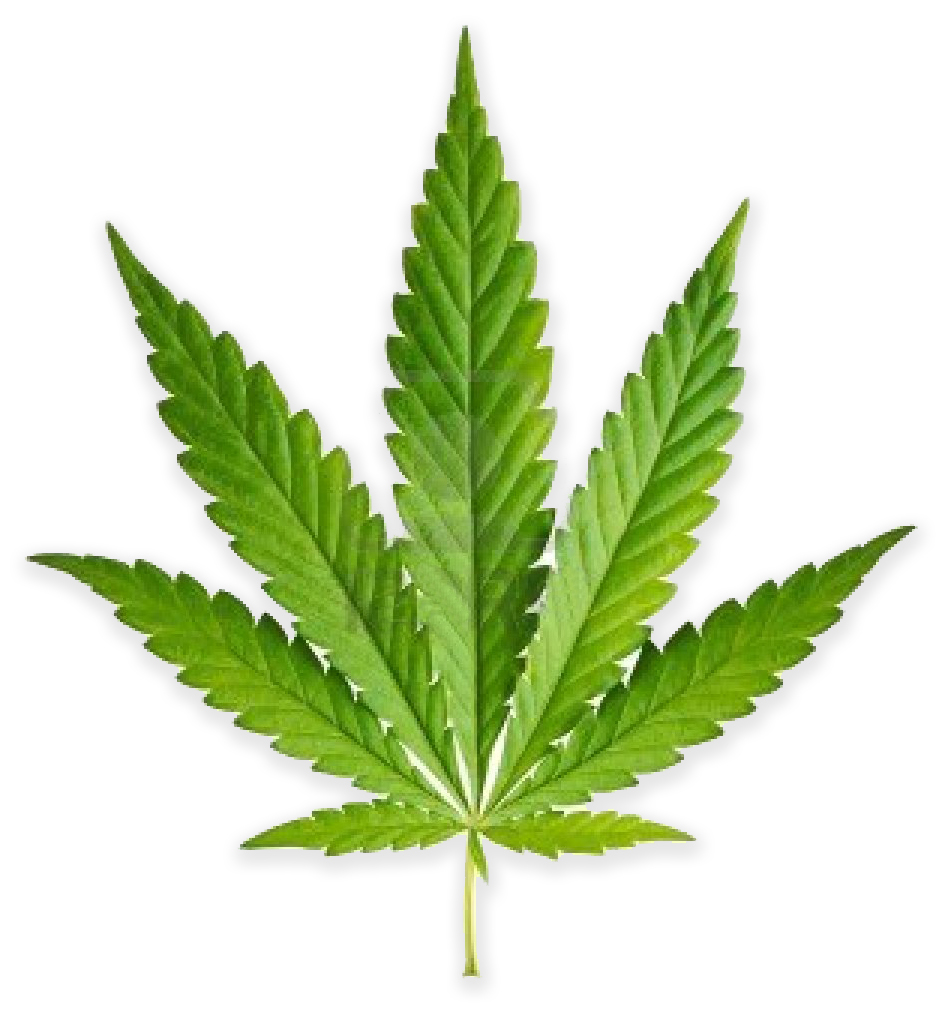 Alexander Wesley Ledvina was caught high on marijuana with a gun in his car. He admitted he had previously bought guns at the same time he was using weed and coke, but on the ATF forms he had filled out, Alex had denied being a drug abuser.
 In United States v. Cooper, the 8th previously identified “at least two situations when § 922(g)(3) is consistent with the 2nd Amendment” – when drug use (1) made a defendant act like someone who is both mentally ill and dangerous, or (2) would cause a defendant to induce terror, or pose a credible threat to the physical safety of others with a firearm. “Without more,” the 8th held, “drug use generally or marijuana use specifically does not automatically extinguish a person’s 2nd Amendment right.”