
We post news and comment on federal criminal justice issues, focused primarily on trial and post-conviction matters, legislative initiatives, and sentencing issues.

GORSUCH ARGUES FOR SUPERVISED RELEASE FAIRNESS
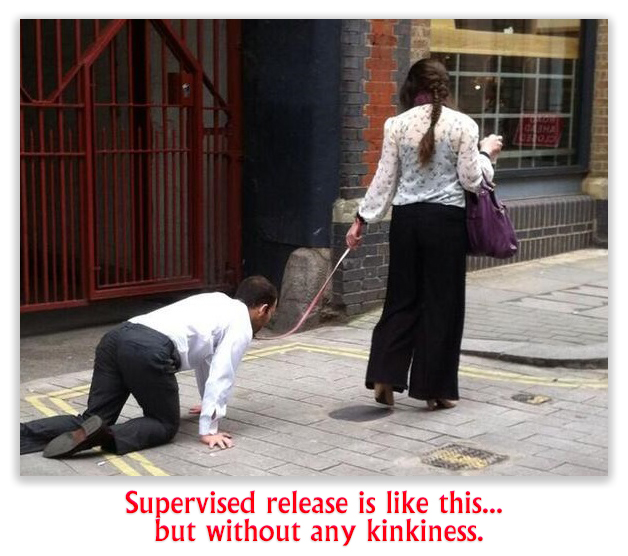 The Supreme Court last week denied review to Jaron Burnett, now serving a supervised release violation. Almost 20 years ago, Jaron pled guilty to an offense with a 10-year statutory maximum. He was sentenced to 105 months in prison, followed by 15 years of supervised release (either to assist him in reacclimating to society or to languish under the thumb of a heartless probation officer, depending on your point of view).
Six years after getting out, Jaron was charged with violating the terms of his supervised release (a little supervised release background here) and received a 13-month sentence. That new term brought his total time in prison to 118 months, just two fewer than the maximum Congress authorized for his underlying conviction. In 2022, Jaron got out and resumed supervised release.
In 2024, Jaron was violated again. This time, he argued that because prison time for the supervised release violation would take the total time for all of his sentence to more than the statutory maximum term of 120 months for the underlying offense, Jaron had a 6th Amendment right to have the government prove its case to a jury beyond a reasonable doubt.
The district court disagreed, applying a preponderance standard and finding that Jaron had committed some of the alleged violations. Based on that, the court sentenced him to 14 more months in prison, bringing his total term of incarceration to 132 months—12 more than the statutory maximum for his underlying crime. The court of appeals affirmed that result, and last week, the Supreme Court denied review.
Justice Neil Gorsuch disagreed. He wrote,
Mr. Burnett does not ask for much… All [he] claims is the right to have a jury decide any contested facts under the reasonable doubt standard where, as here, a court seeks to impose a sentence that will cause a defendant’s total time in prison to exceed the statutory maximum Congress has authorized for his underlying conviction.
I would have taken this case to consider that argument… [U]nder the logic of the decision below, defendants like these can effectively wind up losing for decades (and sometimes forever) the right to receive a federal jury trial to resolve charges against them under the reasonable doubt standard… Bypassing juries, trials, and the reasonable doubt standard in this way may hold some obvious advantages for prosecutors… The Court’s failure to grant review to address whether what happened to Mr. Burnett complies with th[e] 6th Amendment… is unfortunate. I can only hope we will take up another case like his soon—and that, in the meantime, lower courts will more carefully consider the 6th Amendment’s application in this context.”
Burnett v. United States, Case No. 25-5442, 2026 U.S. LEXIS 1196 (March 9, 2026)
~ Thomas L. Root