We post news and comment on federal criminal justice issues, focused primarily on trial and post-conviction matters, legislative initiatives, and sentencing issues.
WHAT’S ‘SUBSTANTIAL’? WE KNOW IT WHEN WE SEE IT…
 It’s an article of faith among federal prisoners seeking to attack their convictions or sentences that all they need to find is one flaw, a loose thread in their prosecution that they can pluck, and the whole thing can ravel from a finely constructed conviction into a big pile of nothing.
For those latecomers to the world of law and order, we give you Judge Ed Carnes of the 11th Circuit, who began a 281-page decision handed down this week with the observation that
Because it is a document designed to govern imperfect people, the Constitution does not demand perfect trials and errors do not necessarily require the reversal of a conviction. More than thirty years ago, the Supreme Court reminded us: “As we have stressed on more than one occasion, the Constitution entitles a criminal defendant to a fair trial, not a perfect one.”
The case was a seamy one. A jury convicted the defendant of five sex-related crimes involving minors. His appeal focused on one issue: After the lunch break on the third day of the six-day trial, defense counsel returned late. Apparently, no one noticed his absence, so questioning of one of the 13 government witnesses continued. Counsel missed seven minutes of 31.4 hours of actual trial time, equaling 18 out of a total of about 2,745 answers given by government witnesses during the trial. What little testimony counsel missed was repeated in even more detail by the same witness after counsel returned to the courtroom.
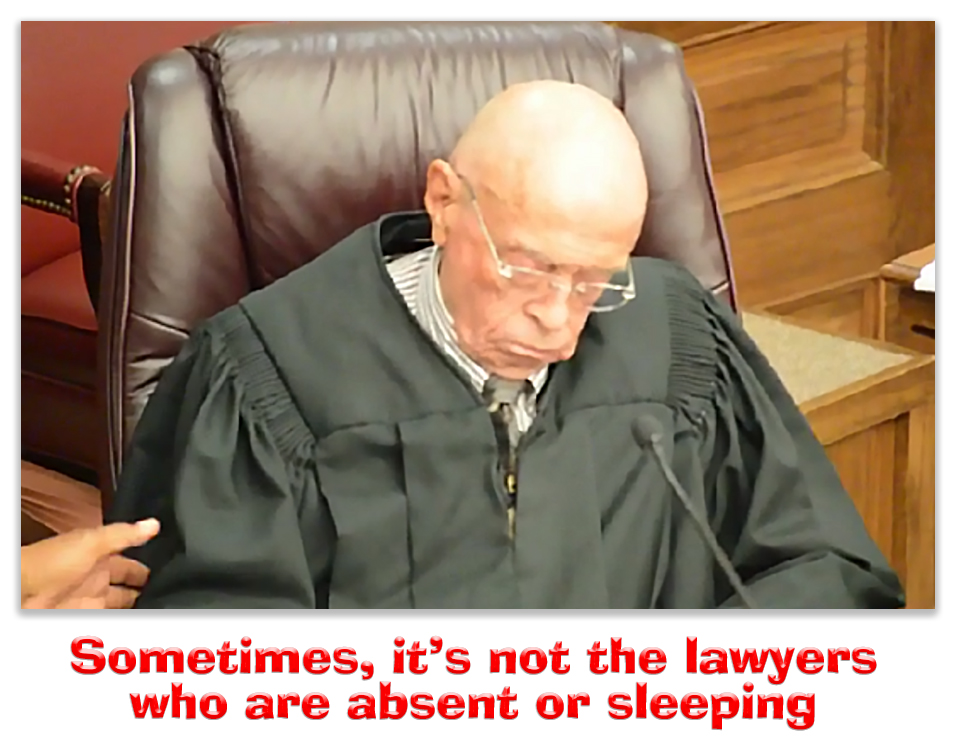 In his 2014 appeal, the defendant convinced two out of three judges that his 6th Amendment right to the “Assistance of Counsel for his defence” were violated, based on the Supreme Court decision in United States v. Cronic. The Cronic Court concluded “that a trial is unfair if the accused is denied counsel at a critical stage of his trial.” Cronic presumed a defendant was prejudiced by such a denial, without the need for the defendant to show that if he had not been denied counsel, the outcome might have been better for him.
Unfortunately for the defendant, enough of the active judges on the 11th Circuit bench were troubled by the panel decision that they voted to rehear the case en banc. On Wednesday, they held that perfection in trials – as in life – is the enemy of the good.
 A majority of the en banc judges agreed that it was “a violation of the Sixth Amendment for inculpatory testimony to be taken from a government witness without the presence of at least one of the defendant’s counsel, regardless of whether the judge or the AUSA noticed that counsel was not there.” But the rub was this: unlike Cronic, the Circuit held that it would not automatically reverse for the denial. Rather, it said that “the harmless error rule is applicable to this brief absence of counsel from the courtroom, and that the absence was harmless beyond a reasonable doubt in this case. “
The 11th Circuit had previously held that the absence of defense counsel while government witnesses gave testimony that did not directly inculpate the defendant was not Cronic error. Now, the Circuit has gone a bit further, holding that absence of defense counsel during testimony that implicates the defendant is not presumed to be prejudicial if the absence is not for a “substantial portion” of the trial.
And what is “substantial?” The en banc Court cobbled together a four-part test, borrowing from a 4th Circuit case about a sleeping lawyer and adding its own gloss to the factors: (1) the length of time missed, (2) proportion of trial missed, (3) significance of the missed portion, and (4) whether the specific part of the trial that counsel missed is known or can be determined.
Using its newly devised test, the Circuit concluded that the portion of the trial missed was not substantial. Because it was not substantial, prejudice is not presumed, but instead, the Court examines whether the error was harmless. The reasoning seems somewhat circular to us. If the part of the trial missed was “significant” it would seem that the defendant was probably prejudiced. An observer could be forgiven for concluding that the Court said that if the defendant was prejudiced, then prejudiced is presumed. If he or she was not prejudiced, then the lawyer’s absence will be subject to a test for prejudice.
We’re not alone at being puzzled by the decision. Over half of the 281 pages are devoted to four concurring and three dissenting opinions.
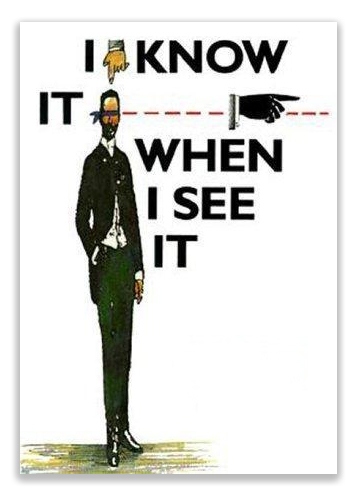 It’s hard to gin up any sympathy for the defendant, who was found guilty of some horrendous crimes (for which he got life in prison) and who could cite no harm that flowed from his attorney missing fewer than one-tenth of a percent of the answers, almost all of which were repeated. But hard cases make bad law, and the Circuit’s four-part “test” does not seem to be that far from Justice Potter Stewart’s test for hard-core pornography from Jacobellis v. Ohio:
I shall not today attempt further to define the kinds of material I understand to be embraced within that shorthand description; and perhaps I could never succeed in intelligibly doing so. But I know it when I see it…
United States v. Roy, Case No. 12-15093 (Apr. 26, 2017)
– Thomas L. Root