It’s a Secret – Update for September 20, 2016

We’re still doing a weekly newsletter … we’re just posting pieces of it every day.  The news is fresher this way …

LISAStatHeader2small
LOOSE LIPS SINK SHIPS

It’s an article of faith among federal inmates that they can file some kind of motion with the district court to get their grand jury materials, so they may comb through them for grist to use in a post-conviction motion.

The 7th Circuit decisively sank the government's arguments.
     The 7th Circuit decisively sank the government’s arguments, much like the Navy sent the Japanese carriers to the bottom at Midway.

Rule 6(e)(3)(E)(ii) of the Federal Rules of Criminal Procedure provides that a court “may authorize disclosure… of a grand jury matter at the request of a defendant who shows that a ground may exist to  dismiss the indictment because of a matter that occurred before the grand jury…” Thus, such inmate motions are almost always shot down, because district courts invoke an “exclusivity rule” that Rule 6(e)(3)(E) prohibits giving anyone grand jury materials unless one of the exceptions listed in subsection (e)(3) is met. Ever. No exceptions.

But now, a 7th Circuit decision handed down last week may sound the death knell for the “exclusivity rule.”

In 1942, the United States won a crucial naval victory at the Midway Islands, sinking a Japanese carrier task force and turning the tide of war in the Pacific. The enemy planned an attack on some Alaskan islands, to draw out U.S. aircraft carriers in order to destroy them. The Navy didn’t fall for the juke, and instead pulled off a stunning win.

mccormick160920
     Col. Robert McCormick, the remote and aristocratic publisher of the Tribune, hated FDR as much as FDR hated him.

When news broke of the victory, the Chicago Tribune printed a story that reported – accurately, it turns out – that the U.S. Navy knew in advance that the Alaskan attack was a distraction. President Roosevelt exploded when he saw the story, because it implied the U.S. had broken the Japanese naval codes (which it had). The President ordered a criminal investigation into the Tribune, which was owned by one of his political enemies, but the grand jury ended up returning no indictments.

About 70 years later, Elliot Carlson – a journalist and historian with a special expertise in naval history – petitioned the federal court for release of the Tribune grand jury materials for a book he is writing about the investigation. The government conceded there remain no interests favoring continued secrecy, but still resisted release of the materials, the 7th Circuit explained, arguing “that no one (as far as we can tell) has the power to release these documents except for one of the reasons enumerated in Rule 6(e)(3)(E).”

The appellate court ruled that Rule 6(e) is a permissive rule, not a mandatory one. It does not prevent the court from releasing grand jury materials where it believes release to be appropriate. Instead, the rule only directs that release always should be considered appropriate in the situations listed in subsection 6(e)(3). The district court’s “limited inherent supervisory power has historically included the discretion to determine when otherwise secret grand-jury materials may be disclosed,” the 7th Circuit said. “Prior to the adoption of the Federal Rules of Criminal Procedure, the Supreme Court held that release of sealed grand jury materials ‘rests in the sound discretion of the [trial] court’ and ‘disclosure is wholly proper where the ends of justice require it.’ The advent of the Criminal Rules did not eliminate a district court’s inherent supervisory power as a general matter.”
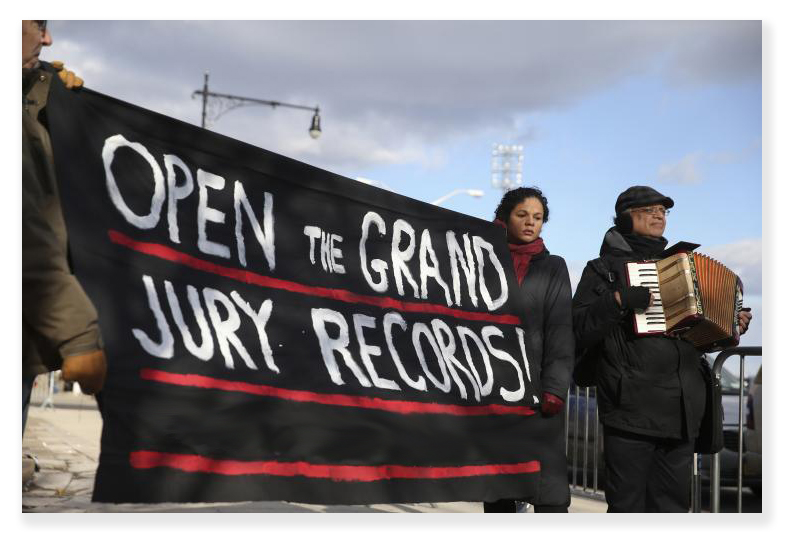
gjrecord160920The Court of Appeals held that Federal Rule of Criminal Procedure 57(b) “recognizes that the rules are not designed to be comprehensive; instead, it says, ‘when there is no controlling law … [a] judge may regulate practice in any manner consistent with federal law, these rules, and local rules of the district.’ This Rule has remained substantively the same since the original 1944 version. To be sure, the court is powerless to contradict the Rules where they have spoken, just as the court cannot contradict a statute, [citing] Carlisle v. United States,); Bank of Nova Scotia v. United States. But it is Rule 57(b), not Carlisle or Bank of Nova Scotia, that informs us what a court may do when the Rules are silent.”

It is doubtful that the Circuit’s ruling declares open season on novel claims justifying disclosure of grand jury materials, especially for defendants and former subjects of such investigations. The appeals panel noted that the “district court engaged in a thoughtful and comprehensive analysis of the pros and cons of disclosure before granting Carlson’s request, and we are content to let its analysis stand.” Nevertheless, district court denials of requests for release of grand jury materials clearly may no longer rely on rote application of the “exclusivity” rule.

Carlson v. United States, Case No. 15-2972 (7th Cir., Sept. 15, 2016)

LISAStatHeader2small

Is Federal Criminal Justice Reform DOA? – Update for September 19, 2016

We’re still doing a weekly newsletter … we’re just posting pieces of it every day.  The news is fresher this way …

LISAStatHeader2small
“THE ENEMY IS THE CLOCK” ON CRIMINAL JUSTICE REFORM

doa160926The New York Times reported Friday that criminal justice reform – most notably the Sentencing Reform and Corrections Act of 2015 – “is effectively dead.”

The Times quoted Senator Richard J. Durbin (Illinois), the second-ranking Democrat in the Senate (and one of the prime movers on criminal justice reform) as saying of the failure, “We missed an opportunity.”

Senator John Cornyn (Texas), the second-ranking Republican in the Senate, echoed Sen. Durbin’s frustration: “It is one of the things that makes this a frustrating place to work.”

The Times said there is virtually no chance the Senate will pass the legislation in the waning days of the year, calling SCRA’s failure “a stunning display of dysfunction given the powerful forces arrayed behind legislation meant to provide a second chance for nonviolent offenders facing long prison sentences while also saving tax dollars on prison costs.”

clock160620The House of Representatives still plans to move forward on a floor vote on a package of six criminal justice reform measures this month, according to plans announced in July by House Speaker Paul Ryan (R-Wisconsin). Holly Harris, executive director of the U.S. Justice Action Network, a leading bipartisan coalition behind the legislation, says, “I think we are close, [but] the enemy is the clock.”

This week, the House will dispose of at least 49 bills this week under “suspension of the rules,” which means each bill can only pass with a two-thirds majority vote, debate is limited to 40 minutes on each measure, and no bill up for a vote can be amended. Unfortunately, the criminal justice package is not included on the list.

Among the bills set for action include designating postal facilities, the “District of Columbia Judicial Financial Transparency Act,” “Modernizing Government Travel Act,” “Iranian Leadership Asset Transparency Act,” and “Cyber Preparedness Act of 2016.”

Still, Congressman Jim Sensenbrenner (R-Wisconsin), chairman of the House Subcommittee on Crime, Terrorism, Homeland Security and Investigations, remained optimistic last week that many of the 11 bills passed out of the House Judiciary Committee will be voted on this month. He wrote that Speaker Ryan “expressed earlier this year his desire to see criminal justice reform legislation come to a Floor vote this month, and as Congress reconvenes, it looks as though there is a strong possibility that it will.”

Microsoft Word - PD8L Copy Revised.docHowever, Adam Brandon – president of the conservative advocacy group FreedomWorks – warned last week that “the window of opportunity for passage is rapidly closing on three criminal justice reform bills — the Sentencing Reform [and Corrections] Act (H.R. 3713), the Recidivism Risk Reduction Act (H.R. 759) and the Criminal Code Improvement Act (H.R. 4002) — all of which have already passed the House Judiciary Committee unanimously… With the House set to adjourn on Sept. 30 and the Senate set to follow suit a week later, [these bills] look increasingly likely to become casualties of the race for the exits as lawmakers head home to campaign for re-election.”

The Marshall Report, a criminal justice reform group, said today “the vaunted bipartisan drive to enact federal criminal justice reform is not quite dead. But its pulse is faint.”

Supporters of reform are engaged in last-ditch lobbying, hoping to convince House lawmakers that reform is a matter of public safety and fiscal prudence. But, as The Marshall Report put it, “Gloomier advocates say that even if Ryan delivers in the House, it would take a near-miracle to get anything bold through the Senate.”

Some reformers think the most Congress might pass is a reprieve for a small group of crack cocaine offenders. “Back in 2010, Congress reduced sentences for inmates who were punished under a law that treated crack cocaine far more severely than powder cocaine,” The Marshall Report said. “An estimated 5,800 people convicted before 2010 remain imprisoned. Congress could make these prisoners retroactively eligible for a judicial review of their sentences.”

LISAStatHeader2small

A Man of Conviction – Update for September 16, 2016

We’re still doing a weekly newsletter … we’re just posting pieces of it every day.  The news is fresher this way …

LISAStatHeader2small
THE GOVERNMENT SCREWS IT UP – THE DEFENDANT PAYS
Maybe coming soon on ABC ... but not nearly so fast for Wilmer.
Maybe coming soon on ABC … but not nearly so fast for Wilmer.

Six years ago, Tennessee cops arrested illegal immigrant Wilmer Canelas-Amador for felony aggravated assault. After that, Walter signed a form agreeing to plead guilty, but there the trail ends.

Before the trial court could enter judgment or pronounce a sentence, the Feds showed up to grab Wilmer for immigration violations. They moved him out of Tennessee, eventually deporting him back to Honduras. Naturally, this meant Wilmer couldn’t show up for his Tennessee presentence interview. The state court, not knowing that ICE had spirited Wilmer off to the tropics, issued a capias – a kind of bench warrant used to drag people into court when they’re supposed to be there – ordering the police to take him into custody for the interview.

Unsurprisingly, nothing ever came of the capias, because Wilmer was located about 1,500 miles south of the Tennessee court that wanted him.

more160916That didn’t last, however. Wilmer was Donald Trump’s worst nightmare, a self-help immigrant who wasn’t going to let a few Federal statutes keep him out of the Land of the Free. Soon enough, he reentered the U.S. illegally and was promptly arrested. He pled guilty to illegal reentry in federal court in Texas and was sentenced to a year in prison before being sent back to the Honduras again. But in 2015, he came back a third time, this time ending up back in Tennessee, where he got caught. He was charged in federal court with another illegal reentry, to which he pled guilty.

This time, the district court hammered him, figuring his Guidelines range to be 57-81 months. At the heart of the court’s calculation was its determination that the state court order accepting his “acceptance of guilty plea” document as a “conviction for a felony that is… a crime of violence,” mandating a 16-level Guidelines enhancement under Guidelines Sec. 2L1.2(b)(1)(A)(ii).

Because Sec. 2L1.2(b)(1)(A)(ii) does not define “conviction,” the district court concluded that the Immigration and Naturalization Act provided the proper definition. Under Sec. 1101(a) of the INA, a “conviction” for an alien is a formal judgment of guilt entered by a court, or is where a judge or jury has found the alien guilty or the alien has entered a plea of guilty or nolo contendere or has admitted sufficient facts to warrant a finding of guilt, and the judge has ordered some form of punishment to be imposed. The district court decided the state court order accepting the guilty plea was “a formal judgment of guilt and is therefore a conviction” under the Guidelines.

This week, the 6th Circuit reversed, holding that “a plea agreement approved in a form order falls well short of a formal judgment of guilt” under the INA.

paperwork160916The panel admitted that agreeing to plead guilty sounded a lot like a conviction, and several other circuits had previously enhanced illegal entry defendants on the strength of their mere admissions of other crimes. But the 6th Circuit said “the reasoning in these cases is very thin.” Instead, it reasoned that “the guidelines are designed to ensure that the penalties provided for in federal criminal statutes are applied in a just, uniform, and predictable way. Thus, while Sec. 1101(a) defines terms only insofar ‘[a]s used in this chapter,’ we believe that… all things being equal, it makes sense to interpret a term used in both a criminal statute and in the guidelines provisions applicable to that statute consistently and with reference to the statutory definition.”

It was clear that Wilmer had not had any punishment imposed for the assault, and that it therefore could not be a conviction under the INA. The Court thought it “might be argued that this conclusion elevates form above substance – he pled guilty to the crime after all! And, in a sense, our decision today does do just that. But it does so for the very good reason that form is of paramount importance in the criminal law.”

unclesam160916The Government’s last-gasp attempt to save Wilmer’s higher sentence was to claim that Wilmer should not benefit just because “he did not comply with his duty to appear in state court for a presentence interview.” The Court made short work of this claim, noting that the Government was “getting things exactly backwards… it was the action of the federal government, not Canelas-Amador, that resulted in his removal from the state before a formal judgment of conviction could be entered.” The Government, the Court concluded, “has no one to blame but itself for the consequences of having in this instance acted too quickly.”

United States v. Canelas-Amador, Case No. 15-6035 (6th Cir. Sept. 14, 2016)

LISAStatHeader2small


Let’s Not Get Ahead of Ourselves – Update for September 15, 2016

We’re still doing a weekly newsletter … we’re just posting pieces of it every day.  The news is fresher this way …

LISAStatHeader2small
NOBODY GOT TIME FOR THAT

Andre Williams’s “out” date is coming up March 6, just as the buds start popping on the trees and the crocuses bloom. The only hitch is that the March 6th Andre is looking forward to falls in the year 2030.

Sweet Brown could have been Andre's judge.
Sweet Brown could have been Andre’s judge.

Nevertheless, he’s a guy who plans ahead. That’s why he petitioned his district court to revise some conditions of his supervised release once the March 6th he’s looking toward finally arrives in 14 years. His judge, not quite so forward-looking, told him to come back later, when the time that supervised release would begin was a little closer.

Under 18 U.S.C. §3583(e)(2), district judges have the authority to revise supervised release terms “at any time.” Andre argued that because a judge may act at any time, he or she must act when a defendant requests him or her to do so. The district judge thought otherwise, observing that in the 14 years between now and Andre’s scheduled release date, “he may have totally other issues that he might want to deal with regarding supervised release.”

In a decision released several weeks ago as a summary order but reissued as an opinion yesterday, the 7th Circuit told Andre that “may” doesn’t mean “must.” 

The appeals panel admitted that Andre “is entitled to know, before he leaves prison, what terms and conditions govern his supervised release. We would be reluctant to allow a judge to deem premature a request in the final year or two of imprisonment. But treating a request 14 years in advance as premature, and requiring the prisoner to make all potential arguments at one time in the year or so before release, is a sound exercise of discretion.”

The Circuit also observed that the district judge could have also noted the governing law may change between now and 2030, which might moot or even enhance Andre’s supervised release terms.  He may as well wait to get the full benefit of the law at the time he needs it. 

United States v. Williams, Case No. 16-1913 (7th Cir. Sept. 6, 2016)

LISAStatHeader2small

Questions of Fact – Update for September 14, 2016

We’re still doing a weekly newsletter … we’re just posting pieces of it every day.  The news is fresher this way …

LISAStatHeader2small
HE SAID, SHE SAID

Federal inmate Wallace Dean-Mitchell has not had an easy bit. The record is not clear as to how many incident reports he has received since he was locked up in 1990, but he filed a habeas corpus action challenging his last ten infractions in 2009 (so there must have been a goodly number).

In his habeas corpus action Wally’s complaint was not that he was innocent of the rules infractions. In fact, he seemed to admit his guilt. His beef instead was that he had been denied due process, because he did not receive a copy of the incident reports prior to the hearing or a copy of the Disciplinary Hearing Officer (DHO) reports after the hearing, as required by prison rules.

PrintConnie Reese, the warden, said Wally had received copies of the incident report, and she argued that because he was able to administratively appeal the DHO, he must have gotten a copy of the DHO report as well, because a prisoner has to attach it to the administrative appeal.

The district court accepted Warden Reese’s affidavit that the incident reports had been given to the inmate, and that he must have had the DHO report as well, concluding, based on Superintendent, Massachusetts Correctional Institution, Walpole v. Hill, that the denial of the 28 U.S.C. Sec. 2241 habeas petition was proper because there was “some evidence” in the record that the disciplinary action taken against Wally comported with due process.

Yesterday, the 11th Circuit reversed. First, it noted, using the “some evidence” standard was wrong. In Hill, the Supreme Court said factfinder’s decision in a disciplinary proceeding must be “supported by some evidence in the record.” But Hill is irrelevant when the basis for attacking the judgment is not insufficiency of the evidence, but instead a flaw in the procedure by which the judgment was obtained. Instead, in order to throw out Wally’s habeas corpus petition on summary judgment, without first holding an evidentiary hearing, “the district court had to conclude that there was no genuine dispute as to any material facts regarding his receipt of the Incident Report and DHO report.”

fact160914Reduced to its essence, Wally complained, there was a genuine issue of fact. He said in his affidavit that he never received the incident reports or the DHO order. The Warden said in her affidavits that he had. The Court said that there was “conflicting evidence in the record regarding whether Dean-Mitchell received or did not receive the reports. The Warden said he did receive them, and Dean-Mitchell said he did not. Moreover, the documentation relied on by the Warden is inconclusive, as it does not provide a clear paper trail establishing Dean-Mitchell’s receipt of the reports.”

The report documents themselves noted that they had been delivered to Wally, but the Court noted that there was also “evidence that the DHO report was missing from his file in 2007 and again in 2010, casting doubt on whether regular protocols regarding the reports were followed.”

The Court dismissed Warden Reese’s assertion that because the rules required Wally to attach a copy of the DHO report to his appeal, he must have had a copy. The panel observed that the rule actually said Wally was required to “forward a copy of the DHO report, or, if not available at the time of filing, . . . [to] state in his appeal the date of the DHO hearing and the nature of the charges against the inmate.”  Thus, the appeals court said, “a copy of the DHO report is not a necessary component of filing an administrative appeal [and] the Warden’s declaration indicating that Dean-Mitchell must have attached the reports to his administrative appeals, which was relied upon by the district court to conclude that there was “some evidence” that Dean-Mitchell received the reports, was incorrect and cannot form the basis of the district court’s decision.”

The evidence ended up being pretty much “he said, she said.” Under the circumstances, the Circuit ruled, “given the presence of a genuine dispute as to a material fact, it was error for the district court to take sides in this battle of affidavits and to grant summary judgment in favor of the Warden.”

Dean-Mitchell v. Reese, Case No. 13-14111 (11th Cir. Sept. 13, 2016)

LISAStatHeader2small

10th Circuit Uses Categorical Approach to Hold USSG ‘Conspiracy’ Needs Overt Act – Update for September 13, 2016

We’re still doing a weekly newsletter … we’re just posting pieces of it every day.  The news is fresher this way …

LISAStatHeader2small
WHAT DID JESUS DO? WE NOW KNOW THAT – WHATEVER IT WAS – IT WASN’T CONSPIRACY

conspiracy160606Jesus Martinez-Cruz likes the United States. Perhaps a little too well. He probably did not know, the last time he crossed the border illegally, that he would be the subject of a breakaway holding on generic conspiracy law.

Jesus, a Mexican citizen, was picked up by the Border Patrol backpacking with a friend along Interstate 10 in Arizona. Unfortunately, their backpacks lacked sleeping bags, tents, swimsuits and the makings for S’mores. Instead they were stuffed with about 150 lbs. of marijuana.

When Jesus was sentenced, his Guideline for unlawful entry – USSG Sec. 2L1.2(b)(1)(B) – imposed an additional 12-level enhancement if the defendant had “a conviction for a felony drug trafficking offense for which the sentence imposed was 13 months or less,” or an 8-level enhancement if the defendant has “a conviction for an aggravated felony.” Application Note 5 to Sec. 2L1.2 defines “prior convictions of offenses counted under subsection (b)(1)” to include the offenses of “aiding and abetting, conspiring, and attempting, to commit such offenses.” The Application Notes do not define exactly what “conspiring” might be.

Jesus previously had been removed from the United States after being convicted of a federal drug conspiracy under 21 U.S.C. Sec. 846. Thus, the district court added the 8 levels, despite Jesus’s crafty argument that because the Guidelines do not define “conspiracy,” the common-law definition must apply. This is important because, at virtually all state conspiracy laws (and for that matter, the garden-variety federal conspiracy offense at 18 U.S.C. Sec. 371), require that there be an agreement to commit the crime and at least one overt act in furtherance of the conspiracy. The drug conspiracy statute – 21 U.S.C. Sec. 846 – does not require an overt act.

The district court was not swayed by Jesus’s argument that the lack of an overt-act requirement in the drug conspiracy statute meant that the prior should not be counted. Yesterday, however, the 10th Circuit agreed with Jesus.

The Circuit held that it assumes that an enumerated offense in the Guidelines “refers to the generic, contemporary meaning of the offense.” The Court uses the “categorical approach” of relying only on the statute underlying the prior offense to “ensure that the elements of that generic enumerated offense are congruent with the elements of the defendant’s prior offense.” The Court decided that the Application Note was not clear that the federal drug conspiracy offense was intended to fall within the meaning of the term “conspiracy” used in the Guideline, so it had to resort to the “categorical approach.”

conspiracy160913Applying the categorical approach, the Court held that while “the number of federal statutes allowing for conspiracy convictions without proof of an overt act is much larger than those requiring an overt act, that by itself is not dispositive because of the narrow nature of many of the federal statutes — here, we are defining conspiracy generally (the states also define conspiracy generally). Of the federal statutes which could have applied to Martinez-Cruz’s conviction, the broadest federal conspiracy statute, § 371, requires proof of an overt act—while the drug statute, § 846, does not. And while the common law of conspiracy did not require an overt act… most jurisdictions have jettisoned that doctrine. Under the categorical approach, we look to the law’s current state.”

Considering the weight of current federal and state general conspiracy statutes, the Court said, “we conclude that the generic definition of “conspiracy” requires an overt act. Section 846 does not. Martinez-Cruz’s conspiracy conviction under § 846 is a categorical mismatch for the generic definition of “conspiracy” in U.S.S.G. § 2L1.2 Application Note 5 and he should receive an eight-level enhancement instead of twelve.”

The 10th Circuit decision is at odds with the 5th, 6th and 9th Circuits on the same question. This could set up a Supreme Court review of the question.

United States v. Martinez-Cruz, Case No. 15-2167 (10th Cir. Sept. 12, 2016)

LISAStatHeader2small

Sentencing Reform Schedule Lags, as Black Lives Matter Opposes Bill – Update for September 12, 2016

We’re still doing a weekly newsletter … we’re just posting pieces of it every day.  The news is fresher this way …

LISAStatHeader2small
BLACK LIVES MATTER, BUT INMATES’ LIVES? NOT SO MUCH… 

SR160509The intention House Speaker Paul Ryan (R-Wisconsin) expressed over the summer to bring the Sentencing Reform and Corrections Act of 2015 to a floor vote this month is in trouble, even as the pressure group Black Lives Matter, surprisingly enough, is calling for the bill’s defeat in favor of restarting sentencing reform efforts from scratch in 2017.

Politico reported last Wednesday that House action in September “appears in serious doubt as members return from a long summer recess eager to pass a stopgap budget and get back out on the trail.”

Odds are longer in the Senate. Sen. John Cornyn (R-Texas), a key sponsor of the Senate version of SRCA, said last week that Senate Majority Leader Mitch McConnell (R-Kentucky), “is obviously is concerned about dividing our caucus particularly this close to an election and I share that concern. This needs to be done but I think we can wait until after the election to do it.”

Tough-on-crime hardliners spent the summer arguing against reducing sentences amid a heroin epidemic, increased urban violence and attacks on police. Those opposing the SRCA found support from an unanticipated ally last week: Black Lives Matter announced plans for a Capitol Hill lobbying effort to fight against the measure.

ncompromise160912The Act is “one of those bills that sounds good on the face of it until you dig into what’s actually in it,” said Janaé E. Bonsu of Black Youth Project 100, an associate of Black Lives Matter. She complained that while the bill would cut most drug sentences, it doesn’t do much for people now in prison and adds new mandatory minimums for drug crimes involving guns and fentanyl. She suggested that “it’s probably better to leave it alone and try again in the next session with a better bill. But I can’t support piecemeal criminal justice reform.”

SRCA supporters discount the Black Lives Matter opposition, noting that the bill is supported by more established civil rights groups. Indeed, BLM opposition might help the bill: one liberal lobbyist for the measure said “for your reluctant members who feel like this is just a win for liberals, maybe it could prove to them how truly reasonable these policies are.”

LISAStatHeader2small

7th Circuit Applies Mathis to Guidelines Enhancement – Update for September 9, 2016

We’re still doing a weekly newsletter … we’re just posting pieces of it every day.  The news is fresher this way …

LISAStatHeader2small
PAY NO ATTENTION TO THE MAN BEHIND THE CURTAIN

Since United States v. Mathis, the “modified categorical approach” of parsing state criminal statutes has been taking it on the chin. And no wonder – any fair-minded judge (of which there are some) will admit that no one really knew when the modified approach should be used, and when it should not.

burglary160502The “modified categorical approach,” as you recall, is used in determining whether a state criminal statute defines a crime of burglary, a crime carrying the threat of serious intentional bodily harm, arson or extortion within the meaning of the Armed Career Criminal Act, the Sentencing Guidelines, and several other federal statutes – such as 18 U.S.C. § 16 – that use those terms in describing a crime a violence. Generally, a court is to determine whether the state statute meets (but does not exceed) the common-law definition of those terms by reading the statute, not considering what it is the defendant actually did to violate the statute. That’s the “categorical approach.”

But from time to time, a single statute creates multiple offenses. When that happens, a court may consult a limited universe of documents to determine which offense the defendant was convicted of committing. This is the “modified categorical approach,” but it only applies to “divisible” statutes. In Mathis, the Supreme Court recently clarified (although some would argue that whatever Mathis delivered, it was not clarification) that a statute is considered divisible only if it creates multiple offenses by setting forth alternative elements.

Justin Edwards and Ryan Pouliot pled guilty to firearms offenses carrying an enhanced base offense level under the Guidelines if the defendant has a prior conviction for a “crime of violence.” U.S.S.G. § 2K2.1(a). The version of the Guidelines in effect when they were sentenced defined “crime of violence” to include “any offense under federal or state law… that… is burglary of a dwelling.” § 4B1.2(a)(2). Justin and Ryan had prior Wisconsin burglary convictions for burglary; their district judges counted the convictions as crime-of-violence predicates and applied the higher offense level.

Yesterday, the 7th Circuit reversed the sentences. The Court held that Wisconsin defined burglary more broadly than the Guidelines by prohibiting burglary of a “building or dwelling.” Justin’s and Ryan’s judges – using the modified categorical approach because the statute said “building or dwelling” – looked at the boys’ state charging documents, and found they had been convicted of burglary of a dwelling. Thus, the judges applied a higher Guidelines offense level.

“After Mathis” the Circuit said, “ it’s clear that this recourse to state-court charging documents was improper. The relevant subsection of Wisconsin’s burglary statute sets forth alternative means of satisfying the location element of the state’s burglary offense.” That being the case, the district courts could look no further than the words of the statute. Because the statute criminalized burglary of either a dwelling or a place – such as a shed or outhouse – where no one lived, it was broader than the definition in U.S.S.G. § 4B1.2(a)(2), and could not support the enhanced sentence.

oz160909And much like the Wizard of Oz’s admonition to Dorothy to “pay no attention to that man behind the curtain,” the Circuit acknowledged that “if a statute defines an offense more broadly than the Guidelines, the prior conviction doesn’t count, “even if the defendant’s actual conduct (i.e., the facts of the crime) would fit within the Guidelines definition.”

The 7th Circuit conceded that “Mathis dealt with whether a prior conviction qualifies as a violent felony under the ACCA” and not the Guidelines. Nevertheless, the Court said, “the Guidelines do use the same language of “conviction” and create the same potential for unfairness to defendants in sentencing… and Mathis itself indicates that its holding applies in the immigration context, where Sixth Amendment concerns are similarly immaterial… These reasons, along with our precedents treating ACCA and Guidelines cases interchangeably for purposes of the categorical approach, lead us to conclude that Mathis applies with equal force in the context of the career-offender guideline.”

United States v. Edwards, Case No. 15-2373 (7th Cir. Sept. 8, 2016)

LISAStatHeader2small


Too Many Bites of the Apple – Update for September 8, 2016

 We’re still doing a weekly newsletter … we’re just posting pieces of it every day.  The news is fresher this way …

LISAStatHeader2smallSAM THE SHAM

Twelve years ago, the Richland County, Ohio, Sheriff’s Office launched Operation Turnaround after a drug-related death made headlines in the county seat of Mansfield. Proving that too many cooks spoil the pot, the DEA joined in Operation Turnaround the next year, assigning DEA Special Agent Lee Lucas to the case.

Bad choice. Lee Lucas was, charitably put, a rogue agent. He registered Jerrell Bray as a DEA informant, and Jerrell started making controlled buys. Two people swept up in the Operation were Lowestco Ballard andGeneva France, after Agent Lucas testified Jerrell had made drug buys from them.

Jerrell worked with several RCSO officers, including Detective Charles Metcalf; his supervisor, Sergeant Matthew Mayer; and their supervisor, the head of the detective bureau, Captain Larry Faith. Faith was supervised by non-defendant Major Reeves, who was supervised by Sheriff Steve Sheldon. As a result of Jerrell Bray’s controlled buys, law enforcement arrested and prosecuted over two dozen people, including Ballard and France.

sham160908In 2007, Operation Turnaround fell apart. By then, Jerrell was doing time for an unrelated homicide. He revealed that he had systematically framed targets of Operation Turnaround by using stand-ins to stage drug transactions or by passing off his own drugs as having been purchased from targets under investigation. He claimed that Agent Lucas and another DEA agent were complicit in his actions, specifically those involving Geneva France. He did not implicate any of the RCSO deputies involved.


By then, France had been convicted, although Ballard won at trial after spending a year in pretrial detention. Jerrell Bray pleaded guilty to two counts of perjury and five counts of deprivation of civil rights. His plea agreement indicated he falsely identified a buyer named “Lil S” as Geneva France, and that he committed perjury at her trial. The government moved to vacate France’s conviction, but she spent 16 months in prison before that happened. Bray’s plea agreement did not mention Ballard, who had already been acquitted.

The Feds indicted Special Agent Lucas for obstruction of justice, making false statements, perjury, and deprivation of civil rights for his role in Operation Turnaround. Jerrell Bray testified as a government witness at Lucas’s trial, admitting to fabricating evidence against Ballard and France. But he said that no law enforcement officials, including Lucas, were involved in or aware of his deception. A jury found Lucas not guilty (although the Dept. of Justice Inspector General later blasted Lucas for having “falsified reports and testimony to corroborate Bray’s false identifications.”

France and Ballard sued everyone in a 42 U.S.C. § 1983 action, including the Sheriff’s deputies involved in “Operation Turnaround.” (The government settled with them for Lucas’s conduct a long time ago). The deputies, however, moved for summary judgment on the basis they relied in good faith on Agent Lucas and Jerrell’s falsehoods.

In 2012, Ballard and French located Jerrell Bray (still in prison), and managed to get a new affidavit from him. The following month, in a serendipitous piece of karma, Jerrell died. But his swan song affidavit alleged that the RCSO deputies knew he was framing the targets of Operation Turnaround.

Normally, an affidavit of controverted fact like that would be enough to get Ballard and French past the deputies’ motion for summary judgment. The district court, however, disregarded Bray’s statement under the “sham affidavit” doctrine, and found the deputies immune from suit.

Yesterday, the 6th Circuit upheld the dismissal. Under the “sham affidavit” doctrine, after a motion for summary judgment has been made, a party may not file an affidavit that contradicts his earlier sworn testimony. If the affidavit directly contradicts prior sworn testimony, the Court said, it should be stricken unless the party opposing summary judgment provides a persuasive justification for the contradiction.” Even if the affidavit does not directly contradict prior sworn testimony, it should nonetheless be stricken if it is “an attempt to create a sham fact issue.”

The reason for the doctrine is simple: If a party who has previously been examined at length under oath could raise an issue of fact simply by submitting an affidavit contradicting his or her own prior testimony, “this would greatly diminish the utility of summary judgment as a procedure for screening out sham issues of fact.”

apple160908This, the 6th Circuit said, was Jerrell Bray’s third bite of the apple, the third different story he had told about Operation Turnaround. When Jerrell first confessed to framing people, he implicated Agent Lucas as a participant in framing Operation Turnaround targets. Even then, he did not implicate any Sheriff’s deputies in the initial story. Then, at Lucas’s criminal trial, Jerrell told his second version of events and testified that no law-enforcement officers – not even the DEA agents – had worked with him to fabricate evidence. Now that Jerrell was a defendant in this suit, he told a third story.

The twist, the Court admitted, is that the “sham affidavit” doctrine is generally applied against a party who attempts to avoid summary judgment by filing his own affidavit that directly contradicts his own prior sworn testimony. Ballard and France argued that the district court should consider Jerrell’s affidavit because they made no contradictory statements to avoid summary judgment. Instead, they submitted an affidavit from an opposing party that went against his own interests, and therefore the sham affidavit doctrine should not bar its use.

The Circuit Court made short work of this argument. It held that Jerrell’s affidavit “was submitted for the sole purpose of defeating his codefendants’ motions for summary judgment. And Bray’s interests, while perhaps not directly adverse to his codefendants’, were certainly not aligned with them.

The panel found the rationale underlying the sham affidavit doctrine to be persuasive. Jerrell Bray’s affidavit directly contradicts his sworn testimony at Lucas’s trial in 2011, and was inconsistent with his 2007 statements to authorities — so even when Bray was accusing law-enforcement officials of framing targets, he still did not implicate the deputies.

The RCSO deputies are off the hook.

France v. Lucas, Case No. 15-3593 (6th Cir. Sept. 7, 2016)

LISAStatHeader2small

Outrageous? – Update for September 7, 2016

 We’re still doing a weekly newsletter … we’re just posting pieces of it every day.  The news is fresher this way …

LISAStatHeader2small
FBI “OPERATION PACIFIER” CHILD PORN STING UNDER FIRE

For two weeks last year, the FBI ran one of the largest purveyors of child pornography on the Internet. And now, the agency would rather not talk about it.

pornC160829After arresting the North Carolina administrator of The Playpen, a child-pornography Internet bulletin board on the “dark web,” accessed through a Tor browser, agents seized the site’s server and moved it to Virginia warehouse. From there, they ran “Operation Pacifier,” a computer-hacking operation of unparalleled scope that has thus far led to criminal charges against almost 200 people.During the two weeks the FBI ran The Playpen, visitors to the site traded at least 48,000 images, 200 videos and 13,000 kiddie porn links. At the same time the smut was being transmitted, agents included a secret “Network Investigative Technique,” or NIT, to invade their users’ computers, gather personal information and send it back to the FBI.

In fact, recently filed court exhibits suggest that The Playpen site performed substantially better while under the FBI’s control, with a number of users even commenting on the improvements. The defense for the man accused of being the original administrator of Playpen says these improvements led to the site becoming even more popular. “The FBI distributed child pornography to viewers and downloaders worldwide for nearly two weeks, until at least March 4, 2015, even working to improve the performance of the website beyond its original capability,” Peter Adolf, an assistant federal defender in the Western District of North Carolina, wrote in a motion to have his client’s indictment thrown out for outrageous government conduct. “During those two weeks, the website’s membership grew by over 30%, the number of unique weekly visitors to the site more than quadrupled, and approximately 200 videos, 9,000 images and 13,000 links to child pornography were posted to the site.”

Defense counsel Adolf’s motion contends that “government agents worked hard to upgrade the website’s capability to distribute large amounts of child pornography quickly and efficiently, resulting in more users receiving more child pornography faster than they ever did when the website was running ‘illegally.’” He argues the FBI engaged in “outrageous conduct” by distributing child pornography on a massive scale. Such activity by government agents in an investigation could lead to dismissal of charges if, as Adolf writes, the conduct is “shocking” or “offensive to traditional notions of fundamental fairness.”

What is new here is the defense’s claim that the FBI deliberately improved the site’s functionality for its users, and that this in turn led to more people signing up to Playpen. Adolf does not provide any solid evidence for this apparent causality, but points to the archived Playpen messages which indicate improvements took place.

kittyporn160829The investigation has sparked a growing social and legal controversy over the FBI’s tactics and the impact on Internet privacy, as well as over the agency committing the more serious crime of distributing child porn in order to catch people committing the less serious crime of possessing child porn. Some critics have compared the sting to the notorious Operation Fast and Furious, in which the Bureau of Alcohol, Tobacco, Firearms and Explosives allowed the illegal sales of thousands of guns to drug smugglers, who later used them in crimes.

Now, the FBI’s refusal to discuss Operation Pacifier and reveal exactly how it was conducted is jeopardizing some of the resulting criminal prosecutions. Last month, in United States v. Michaud, a federal judge in Tacoma, Washington, suppressed the evidence obtained against a man indicted in July 2015 on a charge of receiving child pornography because the FBI refused to reveal how it was gathered.

Similar motions are pending in other prosecutions in Washington and elsewhere around the country. USA Today reported on Wednesday that in United States v. Scarborough, a Tennessee case, U.S. Magistrate Judge Clifford Shirley late last month declared the FBI’s search warrant process in its takeover of The Playpen server to be an illegal search, joining at least six other federal judges in the nation to so rule.

pornA160829But Magistrate Judge Shirley refused to exclude the evidence gleaned as a result of Operation Pacifier, ruling the FBI’s method of obtaining incriminating evidence against The Playpen users wasn’t nefarious but merely misguided. Shirley is allowing the evidence against Scarbrough to stand under the good faith exception, that the agents proceeded in good-faith reliance on the law.

According to court documents, between Feb. 20 and March 4, 2015, as many as 100,000 people logged onto the site, which was accessible only by using the anonymous “Tor” browser, which encrypts and routes Internet traffic through thousands of other computers to hide the identity of a user. Some defense attorneys estimate that over 1 million child porn images were distributed during that 2-week operation.

USA Today, FBI tactic in national child porn sting under attack (September 7, 2016)

Motherboard, Lawyer: Dark Web Child Porn Site Ran Better When It Was Taken Over by the FBI (August 23, 2016)

Seattle Times, FBI’s massive porn sting puts internet privacy in crossfire (August 27, 2016)

LISAStatHeader2small